
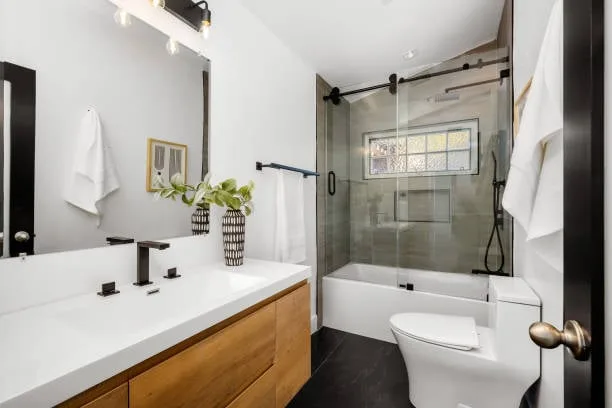
If this is the only tub in the house, think through a typical week before you take it out. A tub and shower combination gives you somewhere to bathe a child and still take a quick shower. If you have another tub, you have more flexibility to turn this one into a walk-in shower.
How much space can the shower use?
Measure the tub alcove, the doorway and the clearance around the toilet and vanity. A new shower can often use the old tub’s footprint. A hinged glass door needs room to swing, while a sliding door needs enough width for a comfortable opening.
Who needs to get in and out?
Ask everyone who uses the bathroom about the tub edge. If stepping over it is difficult, compare a low curb with a curbless entry. A bench takes up floor space, so include it when you measure. Our Lakeland tub-to-shower conversion guide explains how the entry and drain affect the work.
Which uses more water?
Multiply your showerhead’s flow in gallons per minute by the number of minutes you usually shower. Compare that with the amount you actually use to fill your tub. Shower length, flow rate and bath depth all change the answer.
What if you plan to sell?
Some buyers want a tub for children or pets. Others value a shower they can enter easily. If you expect to move soon, check which other bathroom could meet those needs before removing your only tub.
Request a bathroom remodeling estimate to compare keeping the tub with converting the same space to a shower.