
As a Lakeland bathroom remodeler, we see a quiet shift in our planning sessions. Homeowners are no longer asking for accessibility features only because they need them today. They want a bathroom that still works in 20 years. Across more than 1,000 homeowner planning sessions, 19% of serious planners cited aging-in-place as a motivation, and 77% of tub to shower conversions included or considered accessibility features such as benches, grab bars, or low thresholds. We compared those numbers with NAHB, Houzz, Harvard JCHS, and a 2026 academic study. The pattern holds: aging-in-place has become a planning-stage decision, and it depends on work done before any tile is set.
Three Surprising Findings
- Aging-in-place is now a planning motive, not a reaction. In our sessions, 19% of serious planners named it as a reason to remodel. NAHB data points the same way: 65% of aging-in-place projects are client-initiated. Homeowners arrive with the idea already formed.
- Accessibility is part of the tub to shower conversion. In our data, 77% of tub to shower conversions included or considered benches, grab bars, or low thresholds. Houzz found that 28% of renovated bathrooms included curbless showers in 2025.
- Bathroom design predicts independence. A 2026 study in HERD: Health Environments Research & Design Journal found that bathroom universal design features, including walk-in tubs, curbless showers, shower seats, and grab bars, significantly predicted autonomy in older adults. Kitchen and general home features did not.
Key Findings
- 19% of serious planners cited aging-in-place as a motivation (True Builders planning sessions)
- 77% of tub to shower conversions included or considered accessibility features (True Builders planning sessions)
- 68% of bathroom projects considered special needs in 2025, up 4 percentage points year over year (Houzz 2025 Bathroom Trends Study)
- 47% of renovating homeowners anticipated special needs five or more years ahead (Houzz)
- 28% of renovated bathrooms included curbless showers in 2025 (Houzz)
- 73% of remodelers report that requests for aging-in-place features have significantly or somewhat increased over the past five years (NAHB)
- 65% of aging-in-place projects are client-initiated (NAHB)
- 27% of home improvement outlays in 2023 came from homeowners 65 and over, up from 14% in 2003 (Harvard JCHS)
- Bathroom universal design features significantly predicted autonomy in older adults (HERD Journal, 2026)
What This Means for Central Florida Homeowners
For homeowners in Lakeland and across Central Florida, the message is simple: the bathroom you remodel today may need to serve you for decades. Whether you search for a bathroom remodel near me or compare a bathroom remodeling contractor, the useful question is how the work is done.
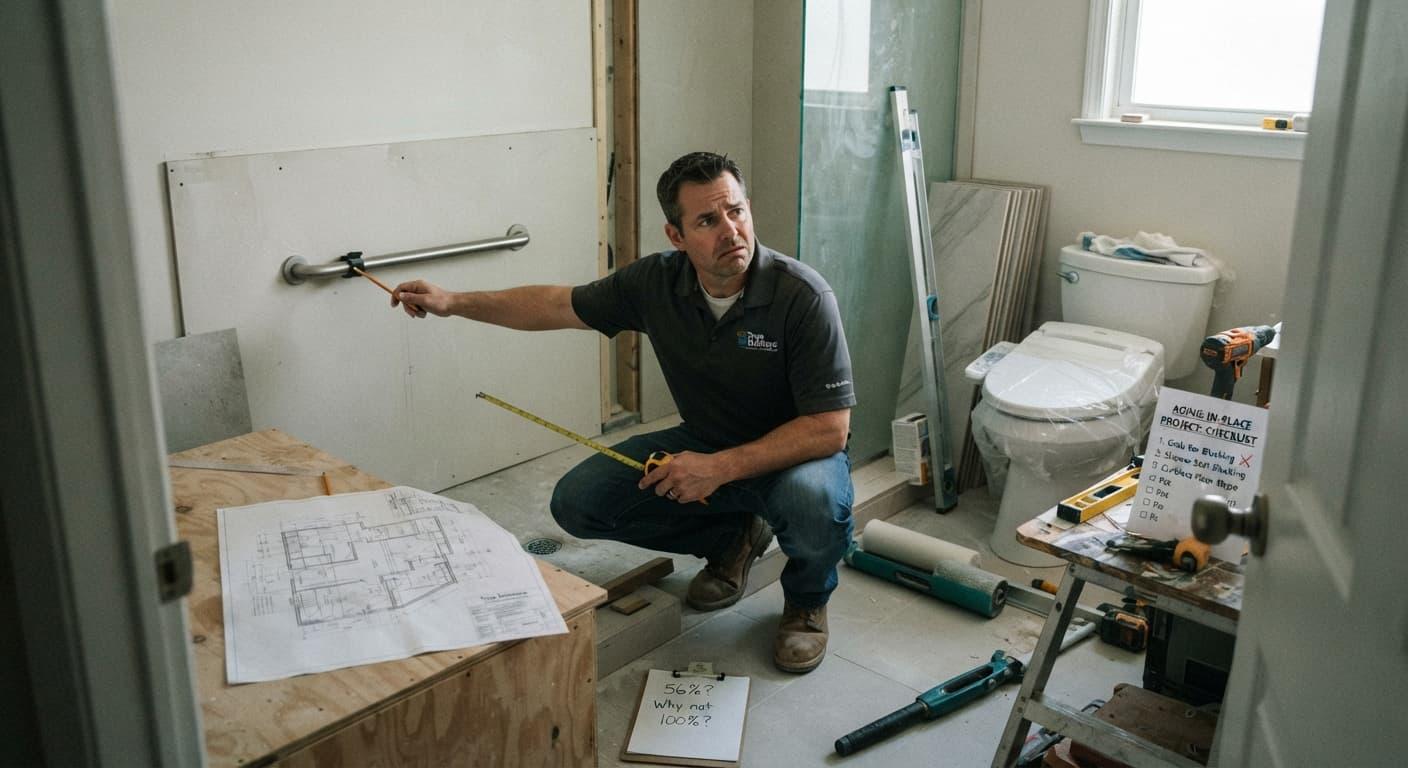
A walk-in shower only works if the hidden parts are right. Before any tile goes down, we check three things:
- The shower pan. We flood test it and confirm it is waterproofed.
- The drain. We verify its position and slope, which matters most in a curbless shower.
- The permit. We confirm it is in place so the work is inspected.
Skipping any of these can turn an accessibility upgrade into a leak. Good bathroom remodeling also means preparing the walls for future grab bars now, so nothing has to be torn out later. You can see how we approach it in our bathroom remodeling services, or read our guide to walk-in shower conversion in Lakeland.
“Homeowners are asking about future-proofing their bathrooms years before they need grab bars or curbless showers,” said Issac Turpin, CEO of True Builders. “A walk-in shower only delivers that safety if the hidden work is right, and that work happens before any tile is set.”
Methodology
We combined True Builders’ planning data from more than 1,000 homeowner sessions with the NAHB/Westlake Royal Remodeling Market Index, the 2025 U.S. Houzz Bathroom Trends Study, Harvard JCHS’s Improving America’s Housing 2025 report, and a 2026 peer-reviewed study in HERD: Health Environments Research & Design Journal.
The Bottom Line
Aging-in-place bathrooms are not a trend you can wait out. Homeowners are planning early, and the features they want depend on work that happens before tile: a tested shower pan, a correctly sloped drain, and a proper permit. The question is whether your bathroom remodeler builds for it.
Read the complete analysis: Aging-in-Place Design Shift: Why Every Bathroom Remodeler Is Planning for Future Needs.
Planning a future-ready bathroom? Explore True Builders’ bathroom remodeling services for Central Florida homeowners.