

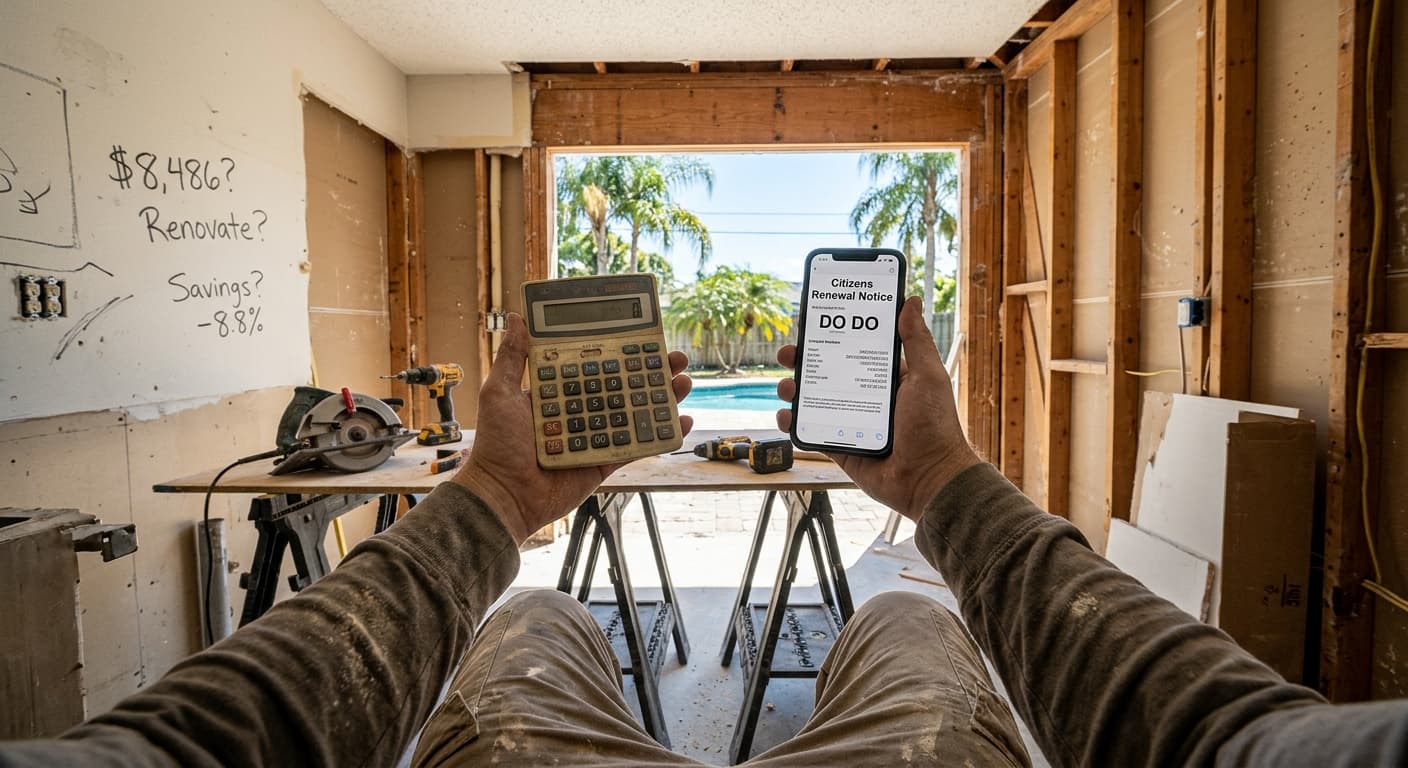
Florida’s insurance market is showing signs of recovery, but lower rates have not made homeownership inexpensive. Citizens Property Insurance Corporation announced an average 8.8% rate reduction for homeowners multiperil policies in 2026, while Insurify’s estimate for Florida’s average annual premium reached $8,486.
For Central Florida homeowners, that gap matters when planning a kitchen remodel, bathroom renovation, home addition, or whole-home transformation. Renovation demand remains strong, but funding a major project still requires a realistic budget. The following statistics explain why homeowners remain cautious and how they can plan around insurance costs.
Key Statistics on Florida Insurance Rate Cuts & Market “Recovery” vs. Homeowner Distrust
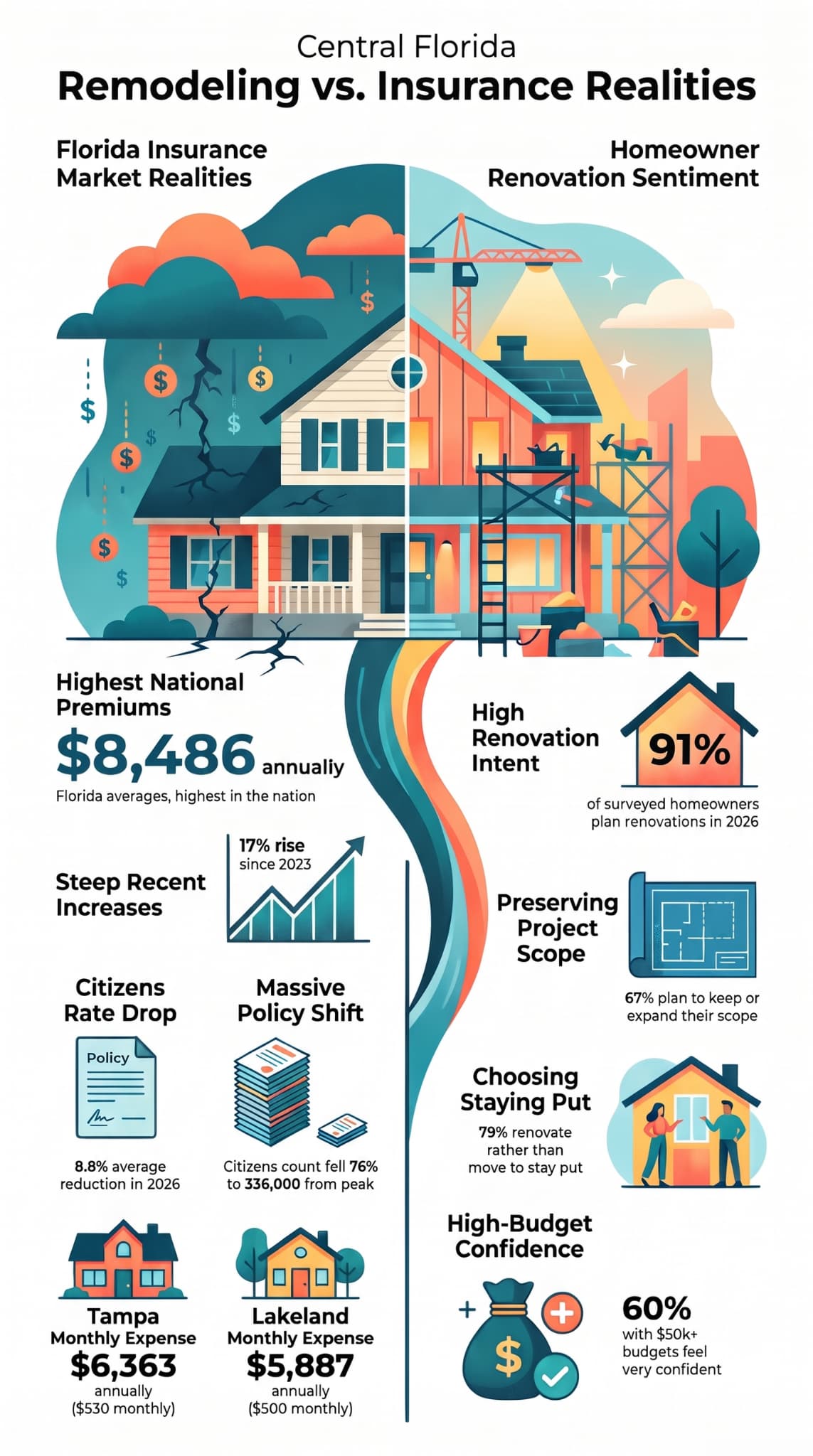
Florida’s insurance market is improving in some areas, but premiums remain a major household expense. These 10 statistics show how insurance costs, homeowner confidence, and renovation plans may affect decisions about whole-home remodeling.
- 8.8% - Citizens’ average statewide rate reduction for homeowners multiperil policies in 2026.
- 336,000 policies - Citizens’ policy count in March 2026, down 76% from its October 2023 peak of 1.41 million.
- $8,486 - Insurify’s estimated average annual Florida home insurance premium, the highest in the country.
- 17% - The reported increase in Florida home insurance premiums since 2023 in the supplied data pack.
- $5,997 a year (about $500 a month) - MoneyGeek’s estimated average annual home insurance premium for Lakeland homeowners.
- 6,363(530/month) - MoneyGeek’s estimated average annual premium for Tampa homeowners.
- 91% - Share of surveyed U.S. homeowners who plan to move forward with renovation projects in 2026.
- 67% - Share of homeowners who plan to keep or expand their renovation scope.
- 60% - Share of homeowners with renovation budgets of $50,000 or more who feel very confident about moving forward.
- 79% - Share of surveyed homeowners choosing to renovate rather than buy because they want to stay in their current home.
Why Is Citizens Property Insurance Cutting Florida Rates by 8.8%?
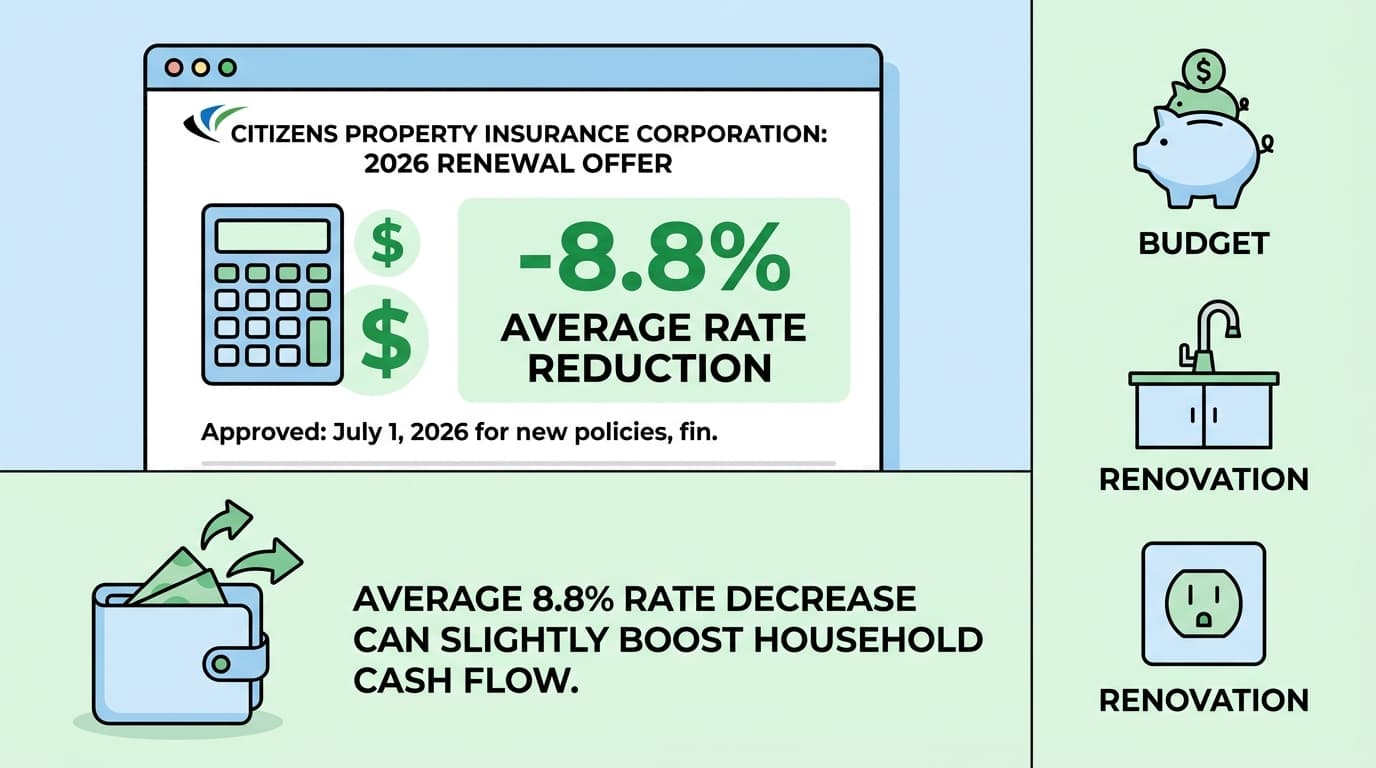
Citizens Property Insurance Corporation announced an average 8.8% rate reduction for its Florida homeowners multiperil policies in 2026. The approved rates apply to new policies from July 1, 2026, and to existing policies when they renew.
The reduction reflects changes in Florida’s property insurance market. More private insurers are writing policies, while recent state reforms have changed the costs and conditions associated with insurance claims and litigation.
For eligible Citizens policyholders, a lower renewal premium can free up some money in the household budget. However, the reduction is an average, not a promise that every homeowner will receive an identical discount.
Homeowners should check the actual renewal offer before treating a rate cut as available remodeling money. The practical effects may include:
- A lower annual premium for some Citizens customers.
- More room in monthly household cash flow.
- An opportunity to review competing coverage offers.
- A reason to reassess the household budget before committing to a renovation.
Insurance savings can help, but they should remain separate from money reserved for emergency repairs and other essential costs.
Why Has Citizens Property Insurance Enrollment Fallen 76% to 336,000 Policies?
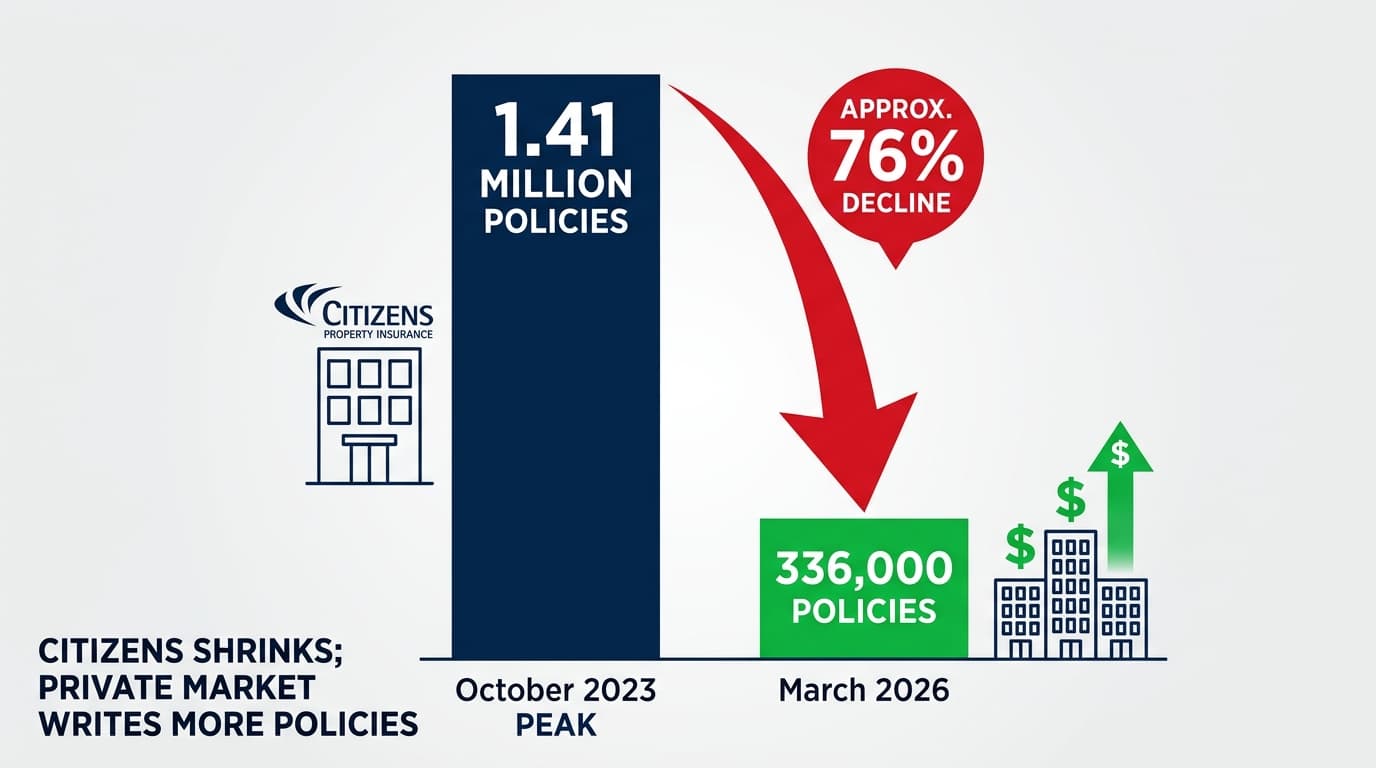
Citizens’ policy count fell from a peak of 1.41 million in October 2023 to 336,000 in March 2026, a decline of approximately 76%. The insurer reported the figures in its March 4, 2026 announcement.
This decline suggests that more homeowners have found coverage through private insurers. Citizens is Florida’s state-created insurer of last resort, so a smaller policy count can indicate that private companies are accepting more business.
| Measurement | Citizens policies |
|---|---|
| October 2023 peak | 1.41 million |
| March 2026 | 336,000 |
| Approximate decline | 76% |
A shrinking Citizens portfolio does not automatically mean the entire insurance market has become affordable. Homeowners who move to private coverage may still face high premiums, windstorm deductibles, coverage limits, or exclusions.
For a family planning whole-home remodeling, the distinction matters. A lower Citizens policy count is a market indicator, not a personal savings estimate. Homeowners should compare their own renewal premiums and coverage before deciding how much money they can safely commit to a kitchen remodel, bathroom renovation, or home addition.
Why Does Florida Still Have the Highest Average Home Insurance Premium at $8,486?
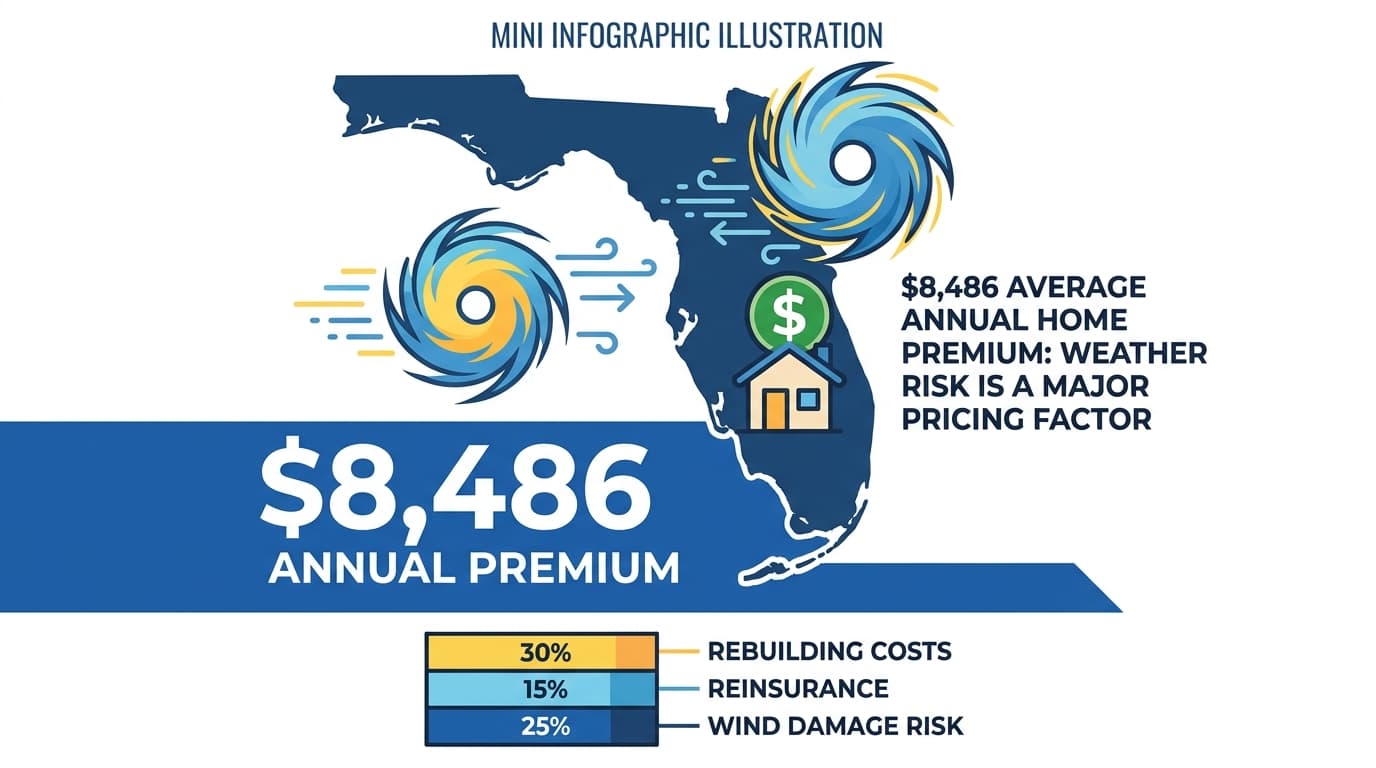
Florida’s average annual home insurance premium reached $8,486, according to Insurify’s 2026 estimates. That figure keeps Florida among the most expensive states for homeowners coverage, even as parts of the market show signs of stabilization.
The state’s exposure to hurricanes, severe storms, and wind damage remains a major pricing factor. Insurers also account for rebuilding costs, reinsurance expenses, and the potential cost of widespread property damage after a major storm.
An $8,486 annual premium works out to roughly $707 per month. For a household already paying a mortgage, property taxes, utilities, and maintenance costs, that is a substantial recurring expense.
High premiums can affect renovation decisions in several ways:
- Less disposable income for optional home improvements.
- More pressure to maintain emergency savings.
- Greater attention to financing terms and monthly payments.
- More careful decisions about which renovation work should happen first.
The statewide figure is an average, not a quote for every property. Homeowners should use their actual policy renewal amount when building a renovation budget.
Why Have Florida Home Insurance Premiums Increased 17% Since 2023?
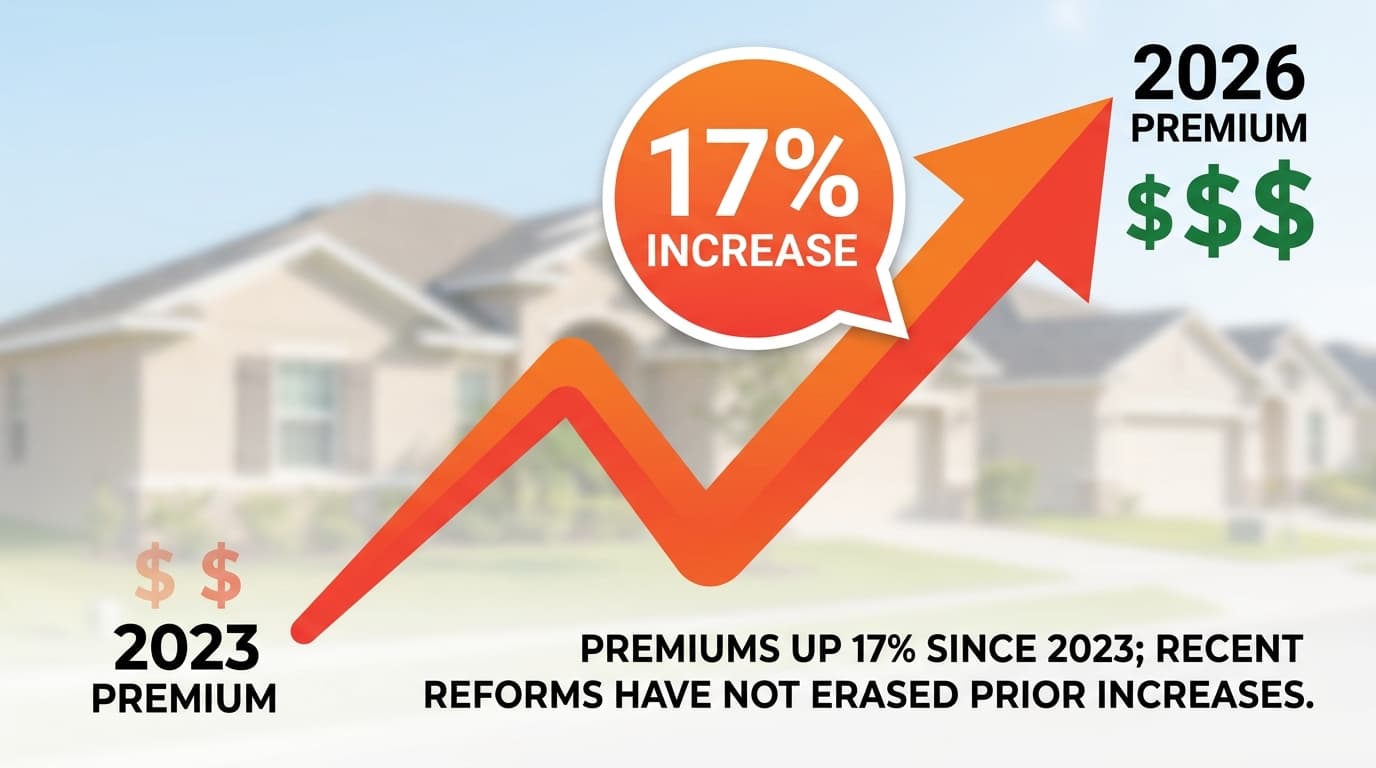
Florida home insurance premiums have increased 17% since 2023 in the supplied Insurify data, showing that recent market improvements have not erased earlier cost increases.
This distinction helps explain why homeowners may not feel the recovery described by insurers and industry groups. A rate reduction for one policy group does not reverse every increase that homeowners have experienced over several renewal cycles.
Insurify’s later 2026 reporting also shows that Florida’s average premium continued to rise during the first half of the year, reaching $8,486. Its figures point to ongoing weather risk and regional differences in insurance costs.
Several factors can contribute to the gap between market headlines and individual bills:
- Earlier premium increases remain part of many homeowners’ current costs.
- Insurers price properties based on location, age, construction, and risk.
- Coverage limits and deductibles differ between policies.
- Rate changes may apply at different times or only to certain policy groups.
For Central Florida families, this means renovation decisions should reflect actual household expenses. A projected insurance reduction should not be treated as guaranteed funding for a whole-home remodel.
How Much Does Home Insurance Cost in Lakeland at $5,997 Annually?
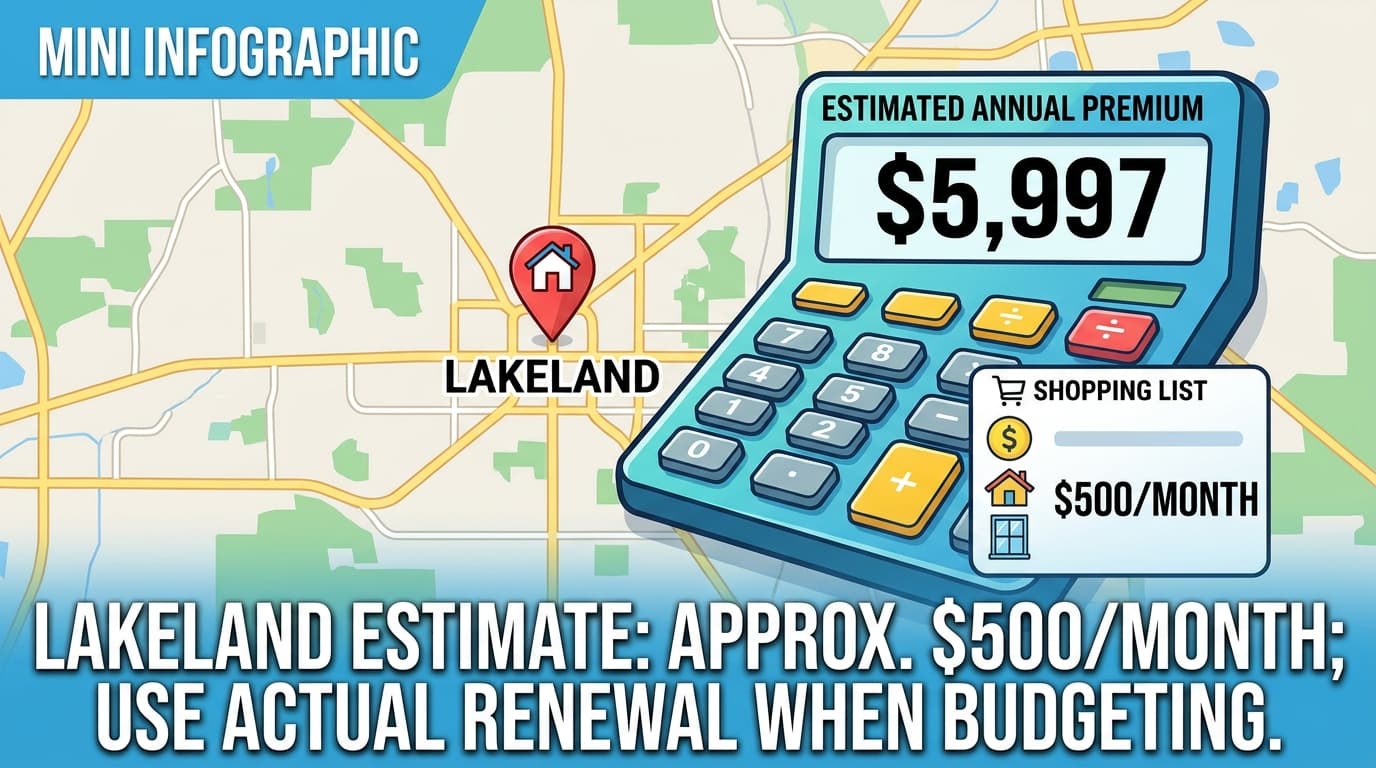
MoneyGeek estimates that Lakeland homeowners pay approximately $5,997 per year, or about $500 per month, for home insurance. This city-level estimate offers local context for households planning home remodeling.
The figure is below the supplied statewide average of $8,486, but it still represents a meaningful monthly expense. A homeowner considering a kitchen remodel, bathroom renovation, or room addition must account for insurance alongside mortgage payments, property taxes, and regular maintenance.
A $500 monthly insurance cost can affect decisions about:
- How much to set aside for renovation savings.
- Whether to use financing for a larger project.
- Which improvements should receive priority.
- How much cash to keep available for unexpected repairs.
MoneyGeek’s city estimates are modeled figures, not official rate quotes. Actual premiums vary based on the property, coverage, deductible, insurer, and risk factors.
A homeowner should therefore start with the current declarations page and renewal offer. Those documents provide a more useful budgeting figure than a general city average.
Why Do Tampa Homeowners Pay an Average of $6,363 for Insurance?
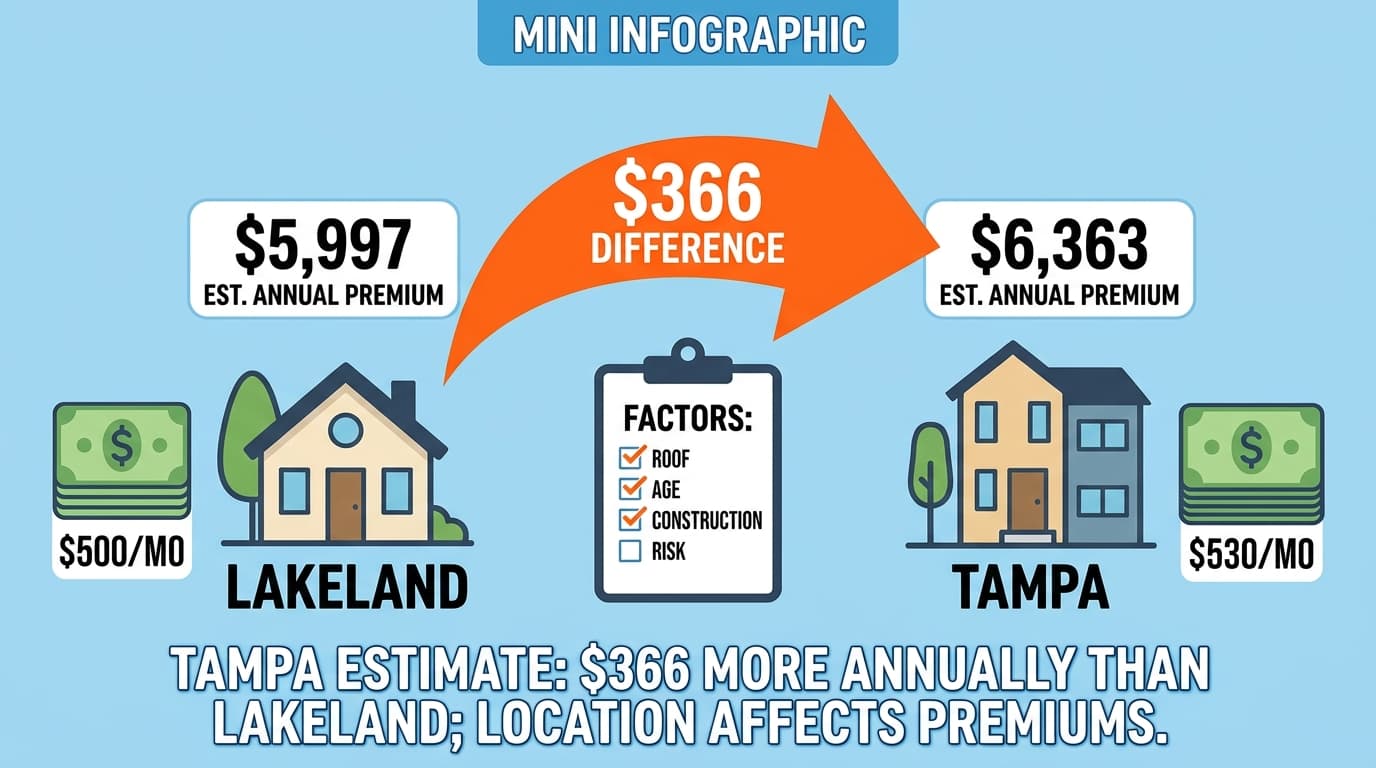
Tampa homeowners face an estimated average annual premium of $6,363, or approximately $530 per month, according to the MoneyGeek figure in the data pack.
That estimate is $366 higher per year than the supplied Lakeland figure. The difference is modest when spread across a full year, but recurring expenses can affect how much a household can save for a major renovation.
| Location | Annual premium estimate | Monthly equivalent |
|---|---|---|
| Lakeland | $5,997 | $500 |
| Tampa | $6,363 | $530 |
| Difference | $366 | $30.50 |
Local insurance estimates can vary because insurers assess property risks differently across locations. A property’s roof condition, construction type, age, coverage amount, and exposure to wind or water damage can also affect the final premium.
For homeowners in Tampa, Brandon, and nearby communities, the practical step is to use the actual policy cost when assessing a project. A renovation budget should also include labor rates, material costs, permit applications, and a contingency allowance.
MoneyGeek’s figures are useful for comparison, but homeowners should request current insurance quotes before making financial decisions.
Why Are 91% of Homeowners Planning Renovations in 2026?

According to Houzz’s 2026 U.S. Renovation Plans Report, 91% of surveyed homeowners plan to move forward with renovation projects in 2026. The result suggests that economic uncertainty has not stopped most respondents from pursuing improvements they already planned.
Many homeowners are choosing to improve their current properties instead of taking on the costs and uncertainty of moving. Renovations can also address practical problems that a new home purchase would not necessarily solve, such as an outdated kitchen, an inefficient floor plan, or a bathroom that no longer meets the household’s needs.
Common project priorities include:
- Kitchen remodeling and cabinet replacement.
- Bathroom renovations and updated fixtures.
- Open-floor-plan reconfiguration.
- Home additions and garage conversions.
- Electrical, plumbing, and HVAC upgrades.
The 91% figure reflects survey respondents, not every U.S. homeowner or Central Florida household. Still, it provides useful context for the remodeling market.
For local homeowners, the decision often comes down to whether the existing property can be adapted to their needs at a cost they can manage.
Why Are 67% of Homeowners Maintaining or Expanding Their Renovation Scope?
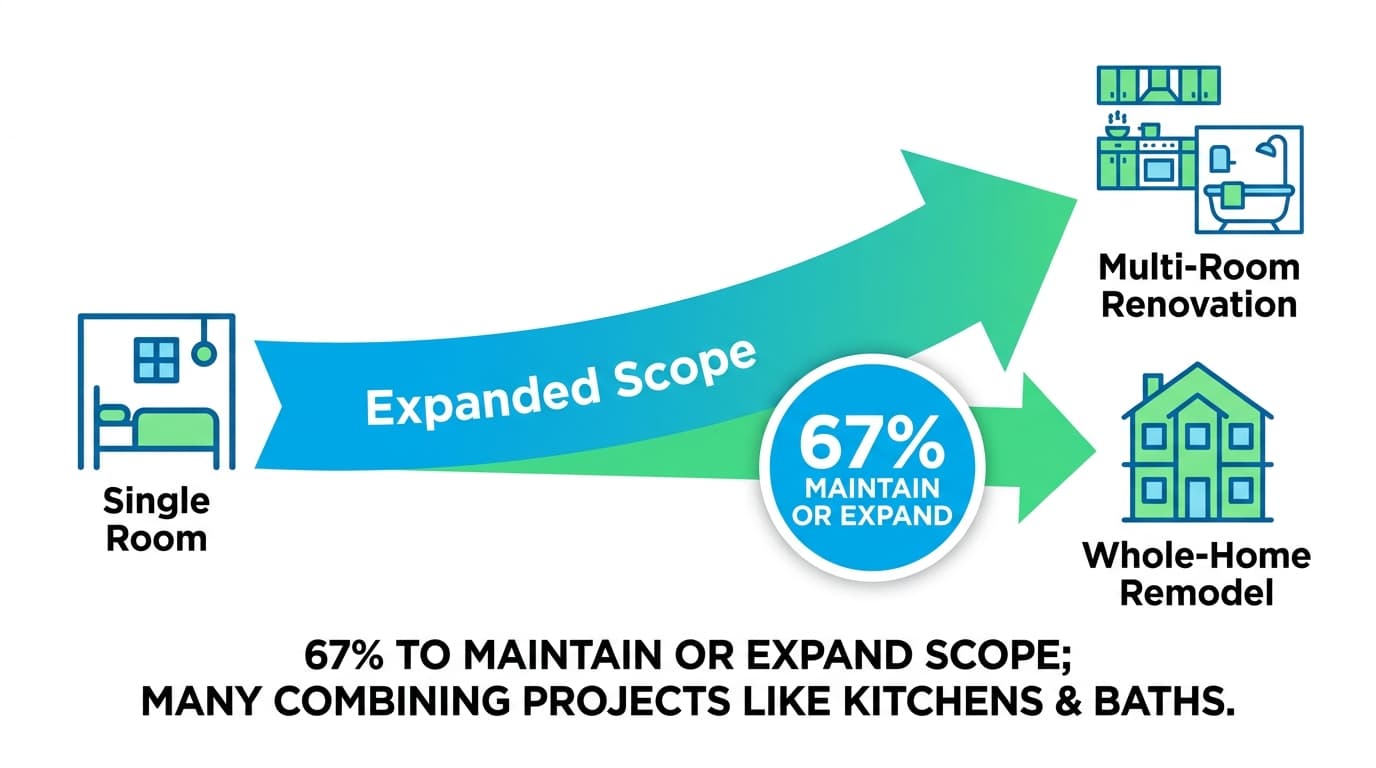
Houzz reports that 67% of homeowners planning renovations will maintain or expand their project scope rather than reduce it. The figure combines homeowners who plan to keep their original scope with those who intend to add work.
This finding suggests that many homeowners have already decided which improvements matter to them. Some may be combining several projects to make their homes more comfortable, accessible, or functional for the long term.
A whole-home remodel can bring multiple improvements into one coordinated construction plan. For example, a homeowner may combine:
- Kitchen and bathroom renovations.
- Flooring, lighting, and interior finish work.
- Structural changes to improve the floor plan.
- Electrical panel or plumbing upgrades.
- A family room addition or expanded living area.
Combining work can help coordinate trades and project schedules. However, it does not automatically make the project cheaper. Structural work, permit requirements, and material selections can increase the investment range.
Homeowners should ask for a detailed scope, a phasing plan when needed, and clear allowances for materials and labor before construction begins.
Why Are 60% of Homeowners With $50,000+ Budgets Confident About Renovating?
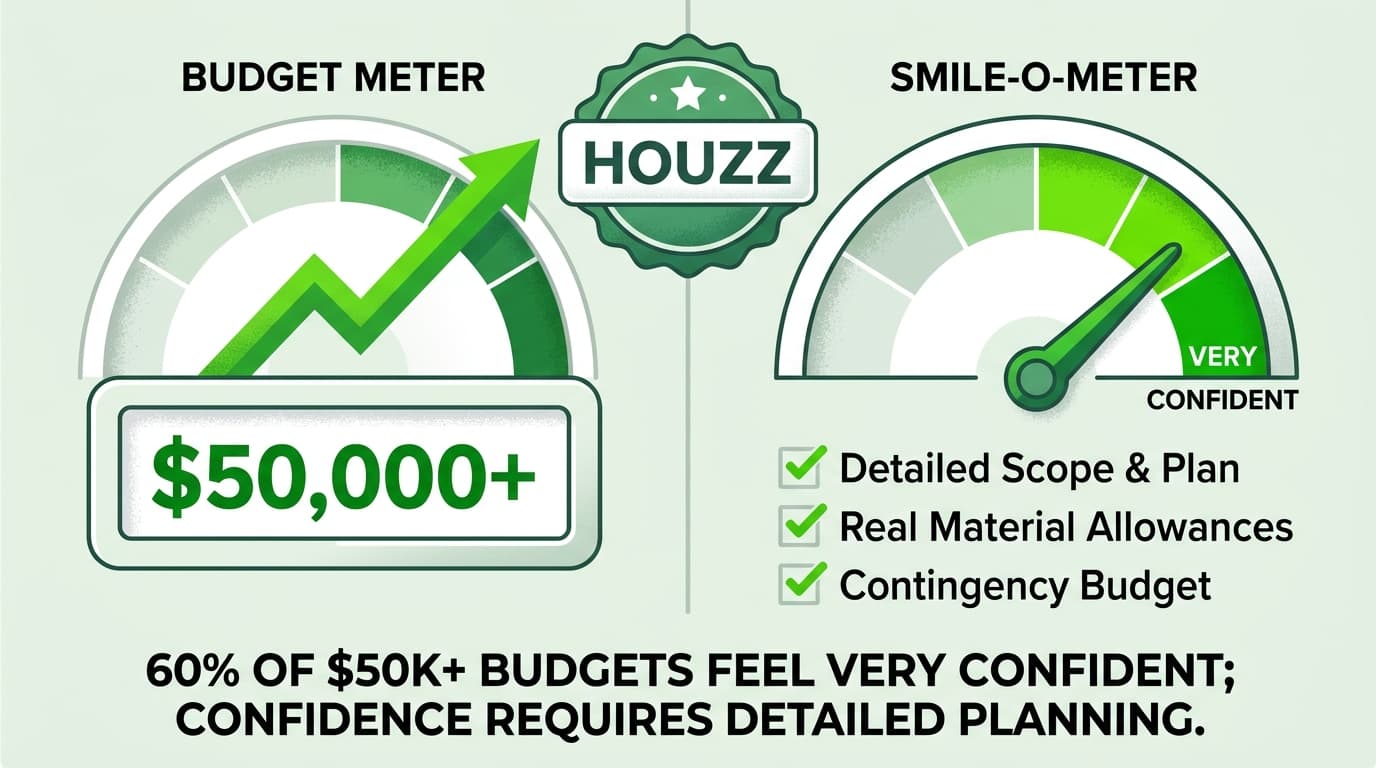
Houzz found that 60% of homeowners with renovation budgets of $50,000 or more feel very confident about moving forward with their projects in 2026.
A larger budget often reflects a project that has moved beyond early ideas. Homeowners may have researched contractors, reviewed design options, considered financing, and decided which improvements they want to complete.
Confidence does not mean the project is free from cost or schedule risks. Houzz also reports that homeowners expect challenges, with product and material costs among their leading concerns.
Before committing to a project above $50,000, homeowners should establish:
- A detailed construction scope and floor plan.
- Realistic material and labor allowances.
- A contingency budget for unexpected conditions.
- A payment schedule tied to project milestones.
- A clear process for changes and approvals.
- A qualified, properly licensed general contractor.
A project manager can help coordinate subcontractors, permit applications, inspections, and finish work. That structure gives homeowners a clearer view of what the investment covers.
Why Are 79% of Homeowners Renovating Instead of Buying Another Home?
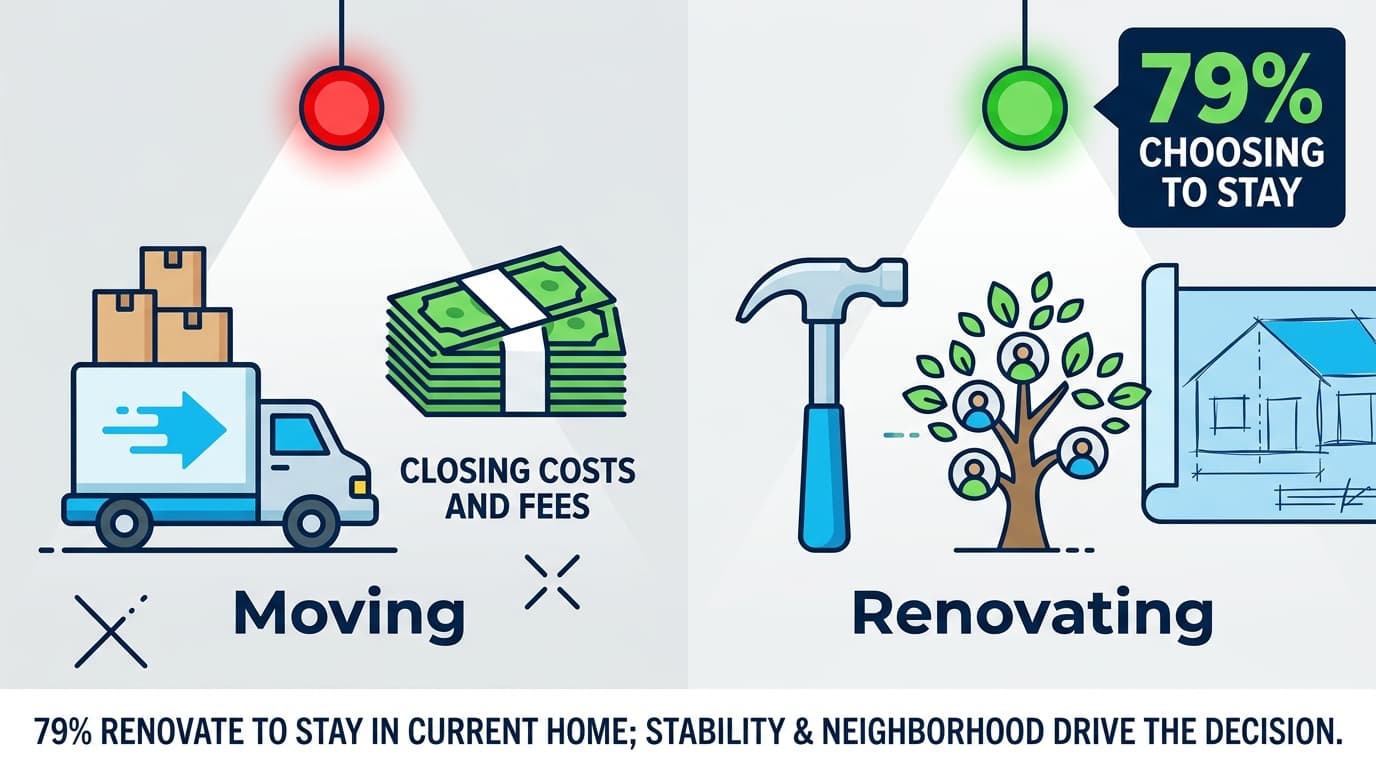
Houzz reports that 79% of homeowners who choose renovation over buying another home say they want to stay in their current home. This points to a strong emotional and practical reason for investing in an existing property.
Moving can bring costs beyond the purchase price. Homeowners may need to pay closing costs, moving expenses, higher mortgage payments, and other costs tied to a new property. Staying in a familiar neighborhood can also matter when people have established work, school, and community connections.
That preference supports demand for whole-home remodeling. Instead of moving, homeowners may choose to:
- Expand kitchens and dining areas.
- Modernize bathrooms and improve storage.
- Add bedrooms or family living spaces.
- Update lighting, windows, and exterior doors.
- Improve accessibility and energy efficiency.
- Rework an outdated floor plan.
A remodel is not always less expensive than moving. The right choice depends on the property’s condition, the cost of the proposed work, available financing, and the homeowner’s long-term plans.
For households that like their location but need more space or better functionality, a carefully planned renovation may offer a practical alternative.
How Should Central Florida Homeowners Budget for a Whole-Home Remodel During Insurance Market Recovery?
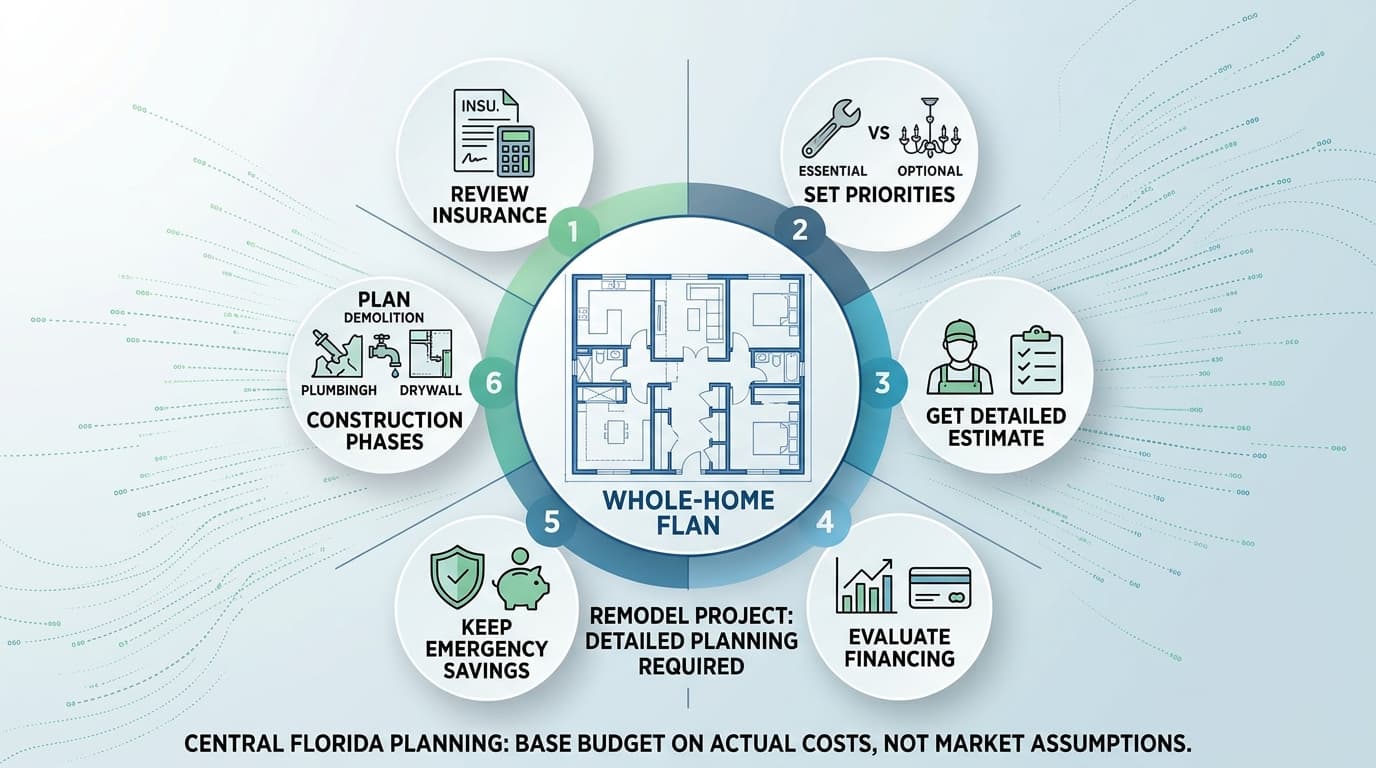
Central Florida homeowners should base a whole-home remodel budget on their actual insurance premium, available funds, and detailed construction estimates. Announced rate reductions should be treated as possible relief, not guaranteed project funding.
A practical planning process can help households avoid committing more money than they can comfortably afford.
-
Review current insurance costs. Use the latest renewal premium, deductible, and coverage details rather than assuming the next renewal will be cheaper.
-
Set renovation priorities. Separate essential repairs and structural work from optional design upgrades.
-
Request a detailed estimate. Include materials, labor, design, permits, inspections, and project management.
-
Evaluate financing options. Compare monthly payments, interest, fees, and repayment terms against the household budget.
-
Keep emergency savings. Avoid using all available cash for a renovation, especially in a state exposed to severe weather.
-
Plan the construction phases. Confirm the order of demolition, MEP rough-in, structural work, and finish work.
A whole-home renovation can involve several trades and building approvals. Homeowners should understand how the general contractor will manage the schedule, communicate changes, and handle the punch list before signing an agreement.
Financing can make a larger project more manageable, but it does not reduce the total cost. The investment should still fit the household’s long-term financial plans.
FAQ
What Should I Check Before Starting Whole-Home Remodeling in Central Florida?
Before starting whole-home remodeling in Central Florida, ask a licensed contractor to inspect your property and identify problems that could affect the renovation.
The inspection should cover the foundation, load-bearing walls, roof structure, electrical panel, plumbing pipes, and HVAC system. Request a written assessment that lists necessary repairs, permit requirements, and estimated material and labor costs.
Do I Need Structural Approval Before Creating an Open Floor Plan?
Before removing a wall to create an open floor plan, find out whether it supports the roof, ceiling, or upper floors. Ask a licensed contractor or structural engineer to determine whether the wall is load-bearing.
If removal requires a support beam, obtain the necessary structural calculations and permits before construction. Also review changes to electrical wiring, plumbing, and HVAC ducts.
How Can I Prepare My Family for a Whole-Home Renovation?
Ask your general contractor to divide the renovation into stages and provide a schedule for each area of your home. The plan should cover interior demolition, electrical and plumbing work, HVAC installation, and finish work.
Confirm when workers will need access to bedrooms, bathrooms, and the kitchen. Arrange temporary living spaces before construction disrupts essential rooms and daily routines.
What Should a Whole-Home Remodeling Contract Include?
Before signing a whole-home remodeling contract, request an itemized estimate covering design fees, permit costs, materials, labor, and waste removal. Check the payment schedule, project milestones, expected completion date, and workmanship warranty.
The agreement should also explain how the contractor will price additional work and obtain your approval. Request a written punch list process for recording unfinished or defective work.
Which Permits and Inspections Are Needed for Home Renovations in Central Florida?
Permit requirements for home renovations in Central Florida depend on the property’s location and the work involved. Structural changes, electrical upgrades, plumbing alterations, and HVAC installations may require separate permits and inspections.
Ask your contractor which applications must be submitted to the local building department. Confirm who will schedule inspections and provide the approved documents after each required inspection.
What Does Florida’s Insurance Market Recovery Mean for Central Florida Remodeling?
Florida’s insurance market is improving, but high premiums still affect household budgets. Even with recent rate cuts, homeowners need to think carefully before taking on a major remodeling project. The key is knowing what your home needs and what you can afford.
True Builders helps homeowners in Lakeland and nearby communities plan whole-home remodels, additions, and restoration projects. If you are considering an upgrade, call (863) 647-1800 or see whole-home remodeling.
Shorter version: Whole-Home Remodeling Central Florida Stalls as Owners Still Pay $6,000 a Year.