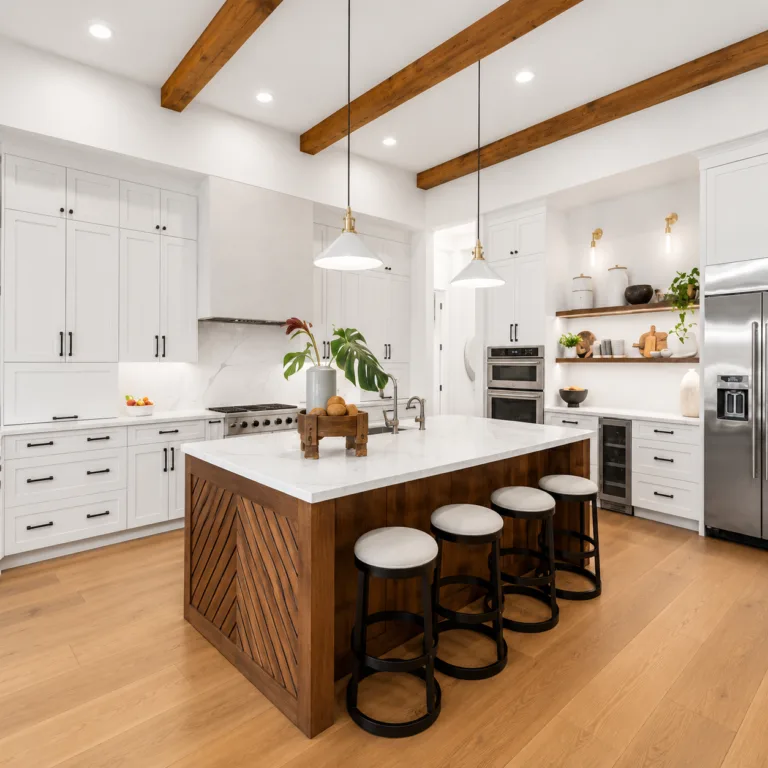

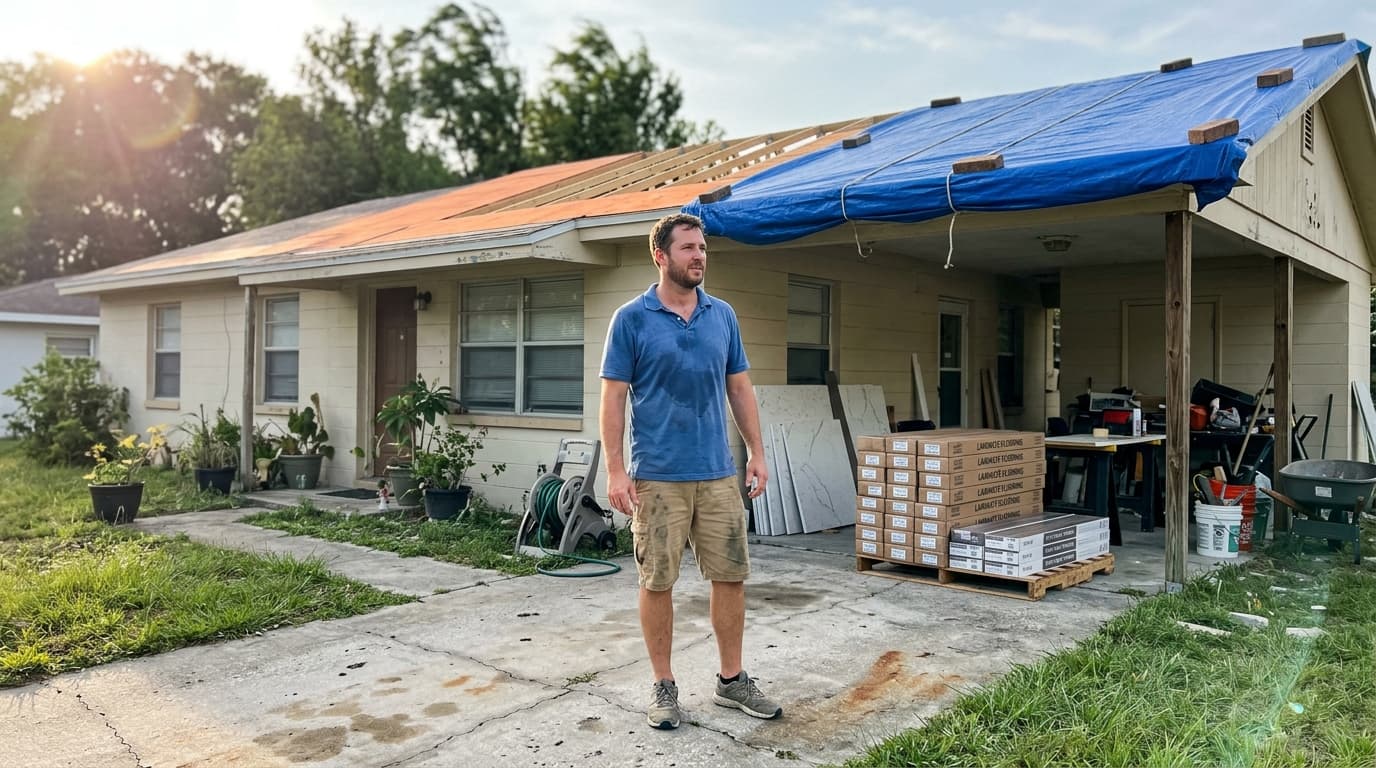
Florida’s rising insurance costs and storm-recovery challenges are changing how homeowners approach repairs and renovations. Insurify reported that Florida’s average annual home insurance premium reached $8,292, compared with a national average of approximately $2,950 in its 2026 report. That gap helps explain why some owners are reconsidering how they fund repairs. Explore the numbers and practical options before planning your next Lakeland home renovation.
Key Statistics on Home Remodeling Lakeland Sees Self-Pay Boom After Milton Insurance Woes
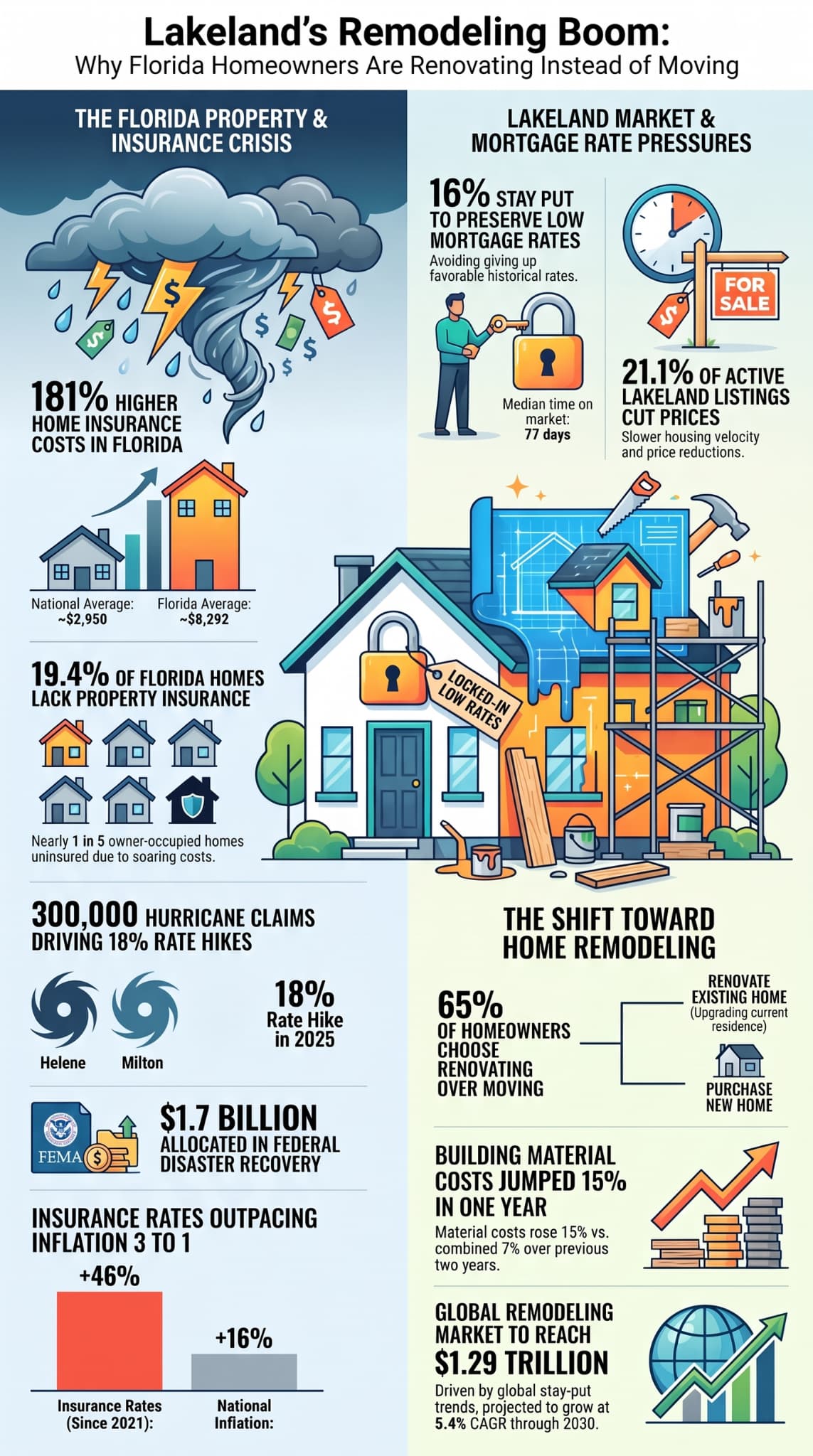
These 10 figures describe pressures that may lead homeowners to repair, renovate, or reinforce their current properties rather than move.
- 181% more. Insurance Business America describes Florida’s annual insurance costs as substantially higher than the national average. The underlying premium figures are approximately $8,292 versus $2,950.
- 19.4%. Coalition for an Insurable Future research is the source for the share of Florida owner-occupied homes without property insurance.
- Approximately 300,000 claims; 18% premium increase. Insurify’s Florida insurance report connects Hurricanes Helene and Milton with roughly 300,000 claims and an 18% increase in Florida premiums in 2025.
- $1.7 billion. FEMA’s Helene and Milton fact sheet is the official source for federal recovery support tied to uninsured losses from those storms.
- 46% versus 16%. Insurify’s national insurance analysis reports that national home insurance rates rose about 46% from 2021 while overall inflation increased 16%.
- 21.1%; 77 days. PropertyIQ’s Lakeland and Winter Haven market analysis reports that 21.1% of active listings had price cuts and median days on market reached 77.
- 65%. Redfin’s renovation survey found that roughly two-thirds of recent renovators upgraded their current homes instead of moving.
- 78.8%; 16%. The 78.8% figure is attributed to Redfin and the Federal Housing Finance Agency for mortgaged homeowners with rates below 6%. Redfin’s mortgage-rate research supports the lock-in trend, including a survey finding that 16% of homeowners were staying put to keep a low rate.
- $1.04 trillion; $1.29 trillion; 5.4% CAGR. Research and Markets’ 2026 home remodeling report projects global market growth to $1.29 trillion by 2030, with a projected 5.4% compound annual growth rate.
- 15% versus 7%. Insurance Business America’s report cites Insurify data reporting that building-material costs rose 15% in the past year, compared with a combined 7% increase during the previous two years.
Why Are Florida Home Insurance Premiums 181% Higher Than the National Average?
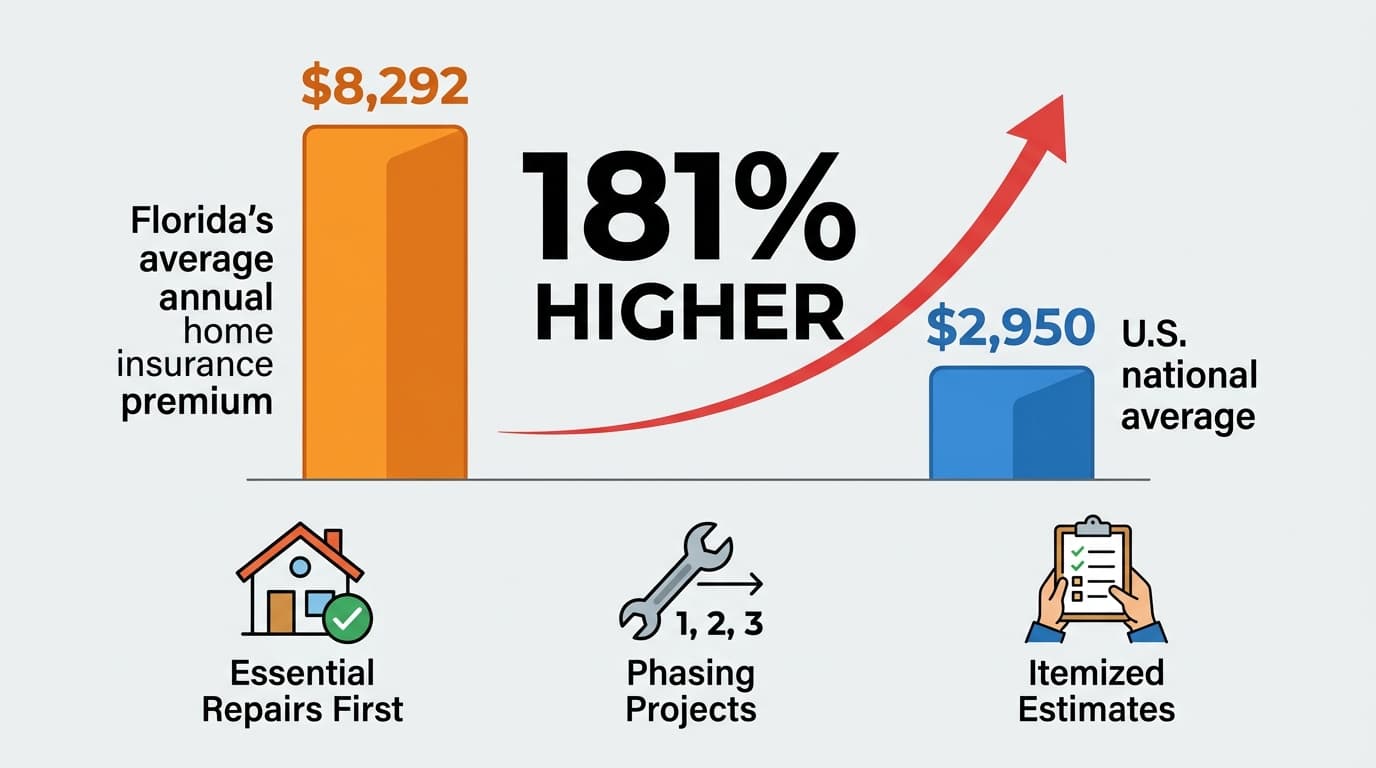
Florida homeowners face substantially higher annual insurance costs than the national average, according to Insurify’s 2026 analysis. That recurring expense can leave less room in a household budget for remodeling, preventative maintenance, and emergency repairs.
| Insurance measure | Reported annual premium |
|---|---|
| Florida average | $8,292 |
| U.S. average | Approximately $2,950 |
The figures represent statewide and national averages, not a personalized quote or a Lakeland-specific premium. Actual costs vary by property, location, coverage, deductible, roof condition, and insurer.
Higher premiums can affect renovation decisions in several ways:
- Essential repairs come first. Owners may focus on leaks, unsafe electrical systems, damaged flooring, or storm-related structural problems before cosmetic upgrades.
- Projects may be phased. A homeowner might complete a necessary bathroom repair now and postpone new cabinets or premium finishes.
- Estimates need detail. Itemized pricing helps owners separate labor, materials, permitting, and optional features.
For Central Florida homeowners, the practical response is to review the policy, confirm what is covered, and compare repair priorities with a realistic budget.
Why Are 19.4% of Florida Owner-Occupied Homes Uninsured?
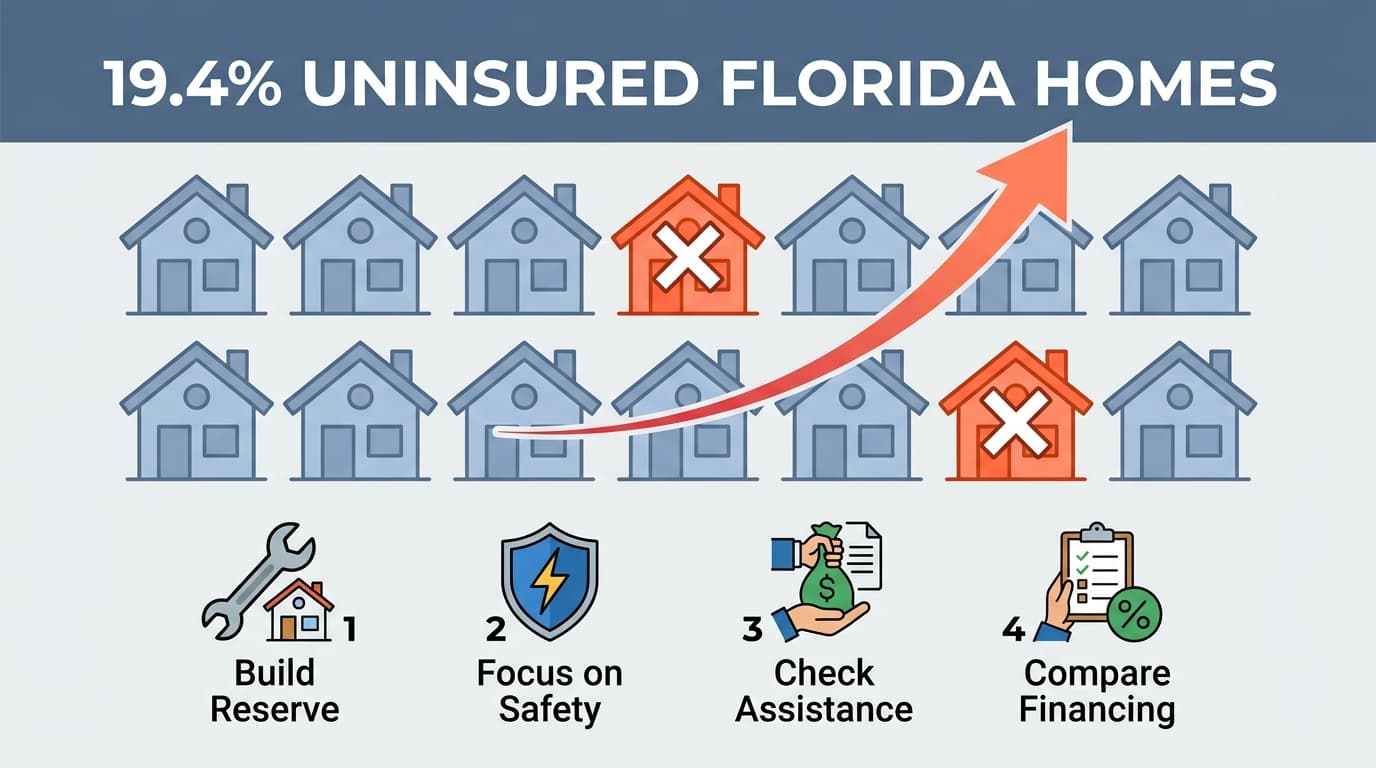
Coalition for an Insurable Future research estimates that 19.4% of Florida owner-occupied homes lack property insurance. That is a substantial group of homeowners who may need to fund damage recovery without a standard property policy.
High premiums can make coverage difficult to maintain, especially when a household also faces mortgage payments, rising maintenance costs, or other financial pressures. The reason a property is uninsured can vary, and a statewide estimate does not establish why any individual owner lacks coverage.
For homeowners considering a self-funded repair or remodel, the implications are practical:
- Build an emergency reserve where possible. Uninsured damage can create large, unexpected expenses.
- Prioritize safety and weather protection. Address active leaks, exposed wiring, and structural concerns before choosing cosmetic upgrades.
- Review available assistance carefully. Federal or state disaster aid has eligibility rules and may not cover every repair or replacement cost.
- Ask about payment options. Compare financing costs and repayment terms before borrowing for a large project.
The term “going bare” can describe a serious coverage gap. It is not a remodeling strategy. Homeowners should understand the risks of remaining uninsured and review coverage options with a qualified insurance professional.
How Did 300,000 Hurricane Claims Contribute to an 18% Premium Increase?
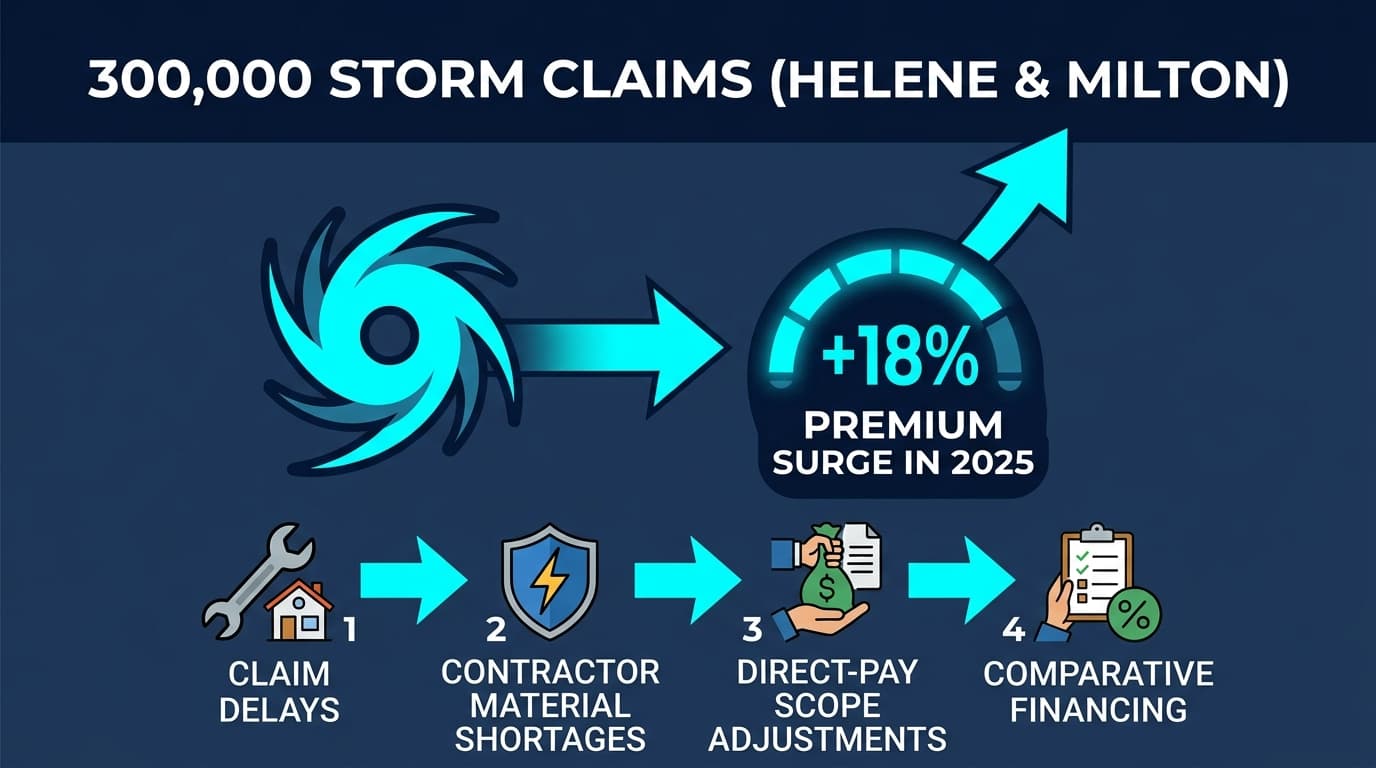
Insurify links approximately 300,000 claims from Hurricanes Helene and Milton with an 18% increase in Florida home insurance premiums in 2025. The figures illustrate how large storm losses and rebuilding expenses can place pressure on an already costly insurance market.
Claim volume alone does not explain every rate change. Insurers also consider repair costs, reinsurance, catastrophe risk, legal expenses, and the terms approved for their policies.
The effects can continue long after a storm leaves the area:
- Homeowners may wait for inspections, estimates, adjuster reviews, or claim decisions before beginning covered work.
- Contractors may encounter material-price changes and scheduling delays during busy recovery periods.
- Households paying directly for repairs may need to narrow the project scope or complete work in stages.
A claim and a remodeling project are not the same thing. A covered repair aims to restore damage under the policy terms, while a renovation may add features or change a room’s layout. Owners should keep those budgets separate and confirm how any proposed upgrade affects an open claim.
Why Did FEMA Provide $1.7 Billion for Uninsured Florida Storm Losses?
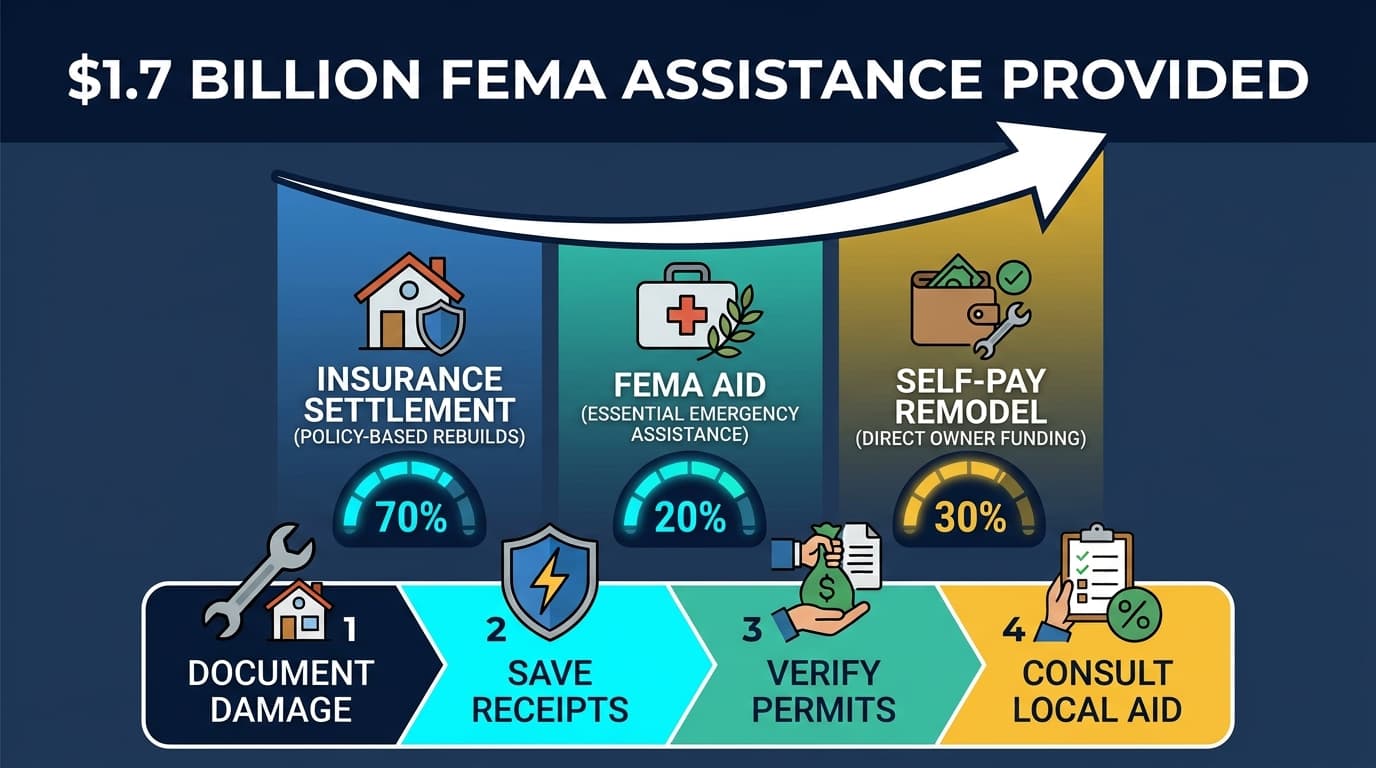
FEMA’s Helene and Milton recovery fact sheet is the source for $1.7 billion in assistance tied to uninsured losses from those storms. Federal disaster assistance is not the same as an insurance settlement.
FEMA assistance is subject to program rules, eligibility requirements, and limits. It does not necessarily pay to rebuild an entire home, replace every damaged item, or fund elective improvements such as a larger kitchen or new bathroom finishes.
For homeowners recovering from storm damage, three distinctions matter:
- Insurance payments depend on the policy, covered cause of loss, deductible, exclusions, and claim decision.
- Federal disaster assistance depends on the relevant declaration, program, eligibility, and approved expenses.
- Self-pay remodeling means the owner funds work directly, whether from savings, financing, or another available source.
Owners should document damage, keep receipts, and ask the relevant agency or insurer which expenses may qualify. Before starting a major rebuild, confirm whether work requires permits and whether an inspection is needed. That helps reduce the risk of paying twice to correct work that does not meet applicable requirements.
Why Did Home Insurance Costs Rise 46% Against 16% Inflation?
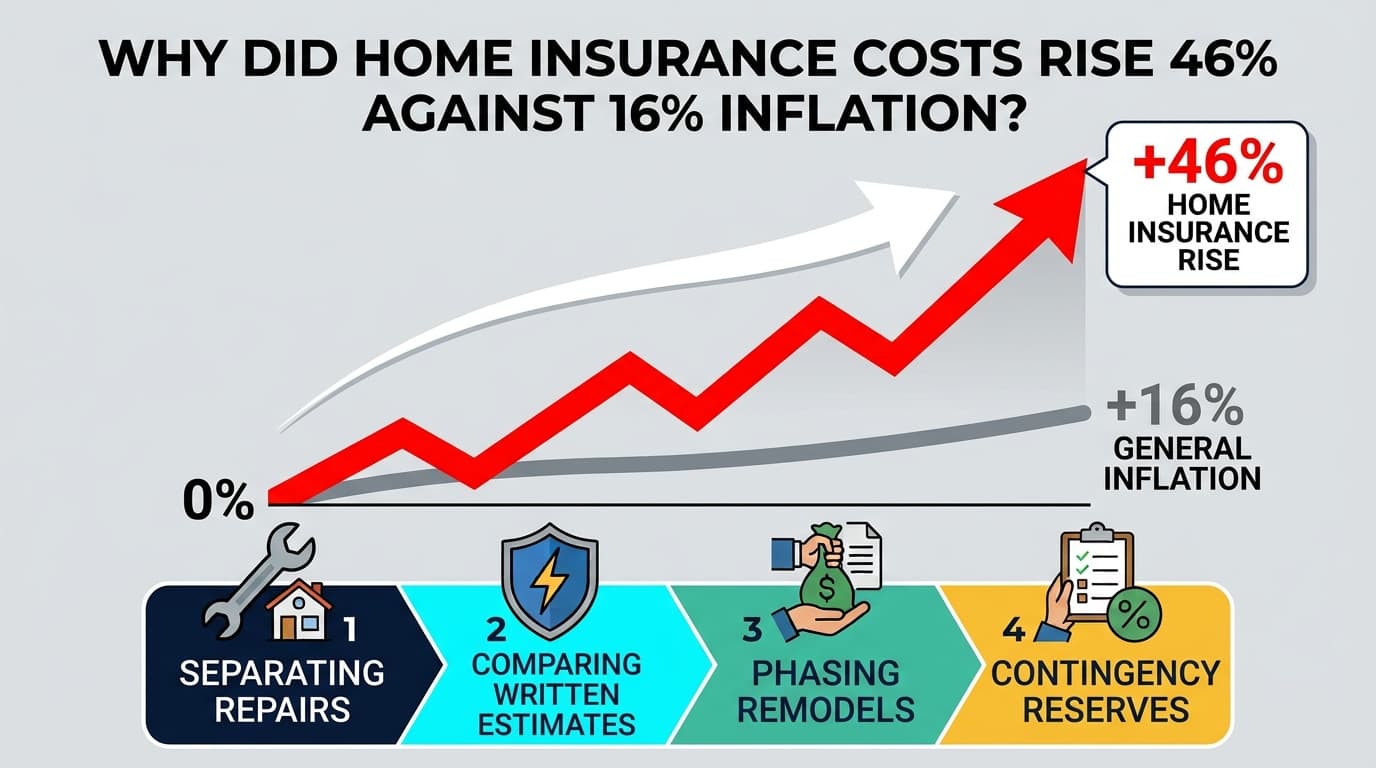
Insurify’s 2026 report says national home insurance rates rose about 46% from 2021, while inflation rose 16%. These are national figures. They are not a Florida-only or Lakeland-specific calculation.
The difference can squeeze renovation budgets. A household may face higher insurance premiums at the same time it pays more for groceries, utilities, labor, and building supplies. Even owners who still want to renovate may be more selective about the work.
Practical ways to manage the pressure include:
- Separating urgent home repair from optional design upgrades.
- Comparing written estimates with the same project scope and material allowances.
- Asking whether a renovation can be divided into phases without creating extra costs.
- Keeping a contingency reserve for concealed damage or changes discovered after demolition.
A smaller project is not always cheaper in the long run if it requires repeated mobilization or rework. The right approach depends on the condition of the property, available funds, and the cost of delaying necessary repairs.
What Do 21.1% Price Cuts and 77 Days on Market Mean for Lakeland Homeowners?
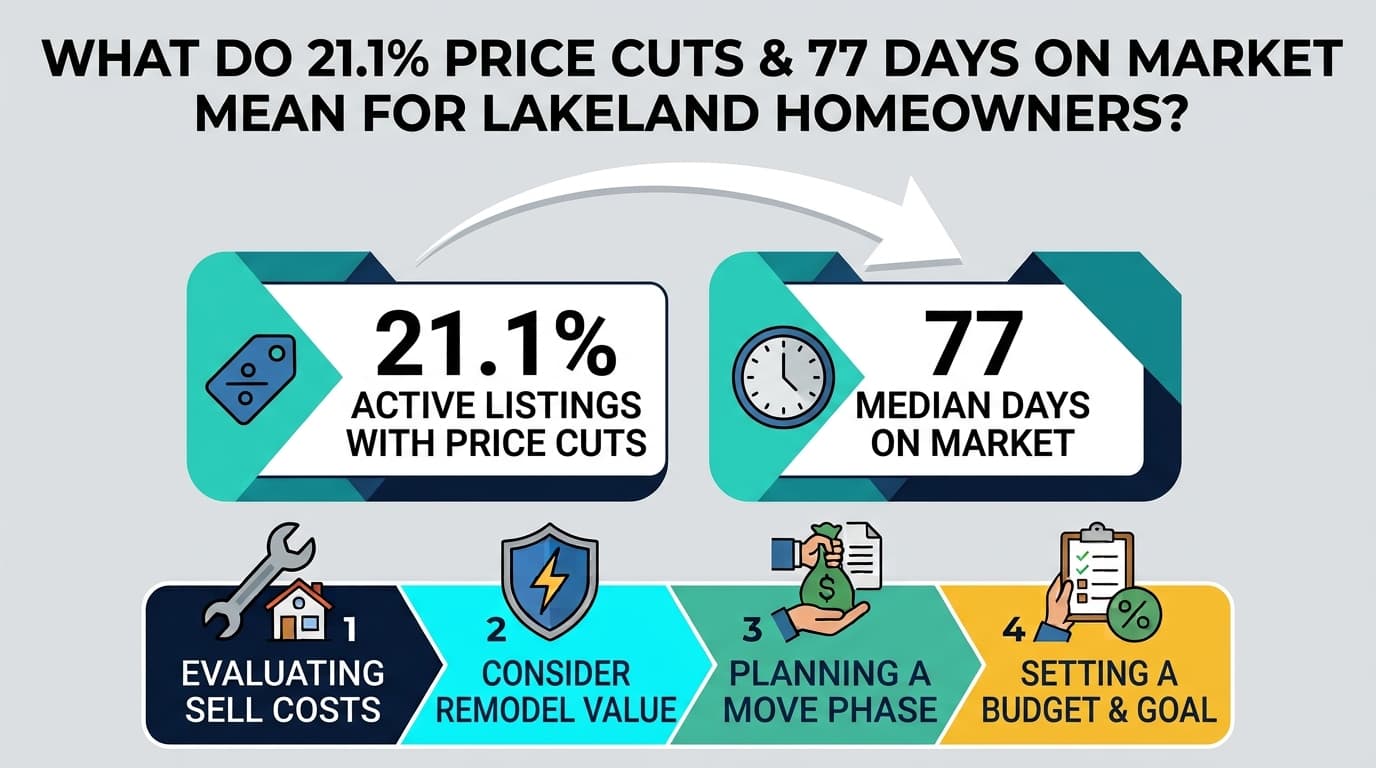
PropertyIQ’s Lakeland and Winter Haven forecast reports 21.1% of active listings with price cuts and a median 77 days on market. Those figures suggest sellers in this market may face longer selling times and more pressure to adjust asking prices.
| Market indicator | Reported figure |
|---|---|
| Active listings with price cuts | 21.1% |
| Median days on market | 77 days |
These indicators may influence how owners weigh moving against remodeling. Selling can involve transaction fees, moving expenses, and the challenge of finding another property that meets a household’s needs. Renovating may let owners improve their current home without putting it on the market.
The figures are market indicators. They are not proof by themselves that every homeowner should stay put.
Homeowners can use the information to make a more grounded decision:
- Compare likely sale proceeds with the cost of buying another home.
- Get realistic estimates for needed repairs and planned improvements.
- Consider whether a bathroom remodel, kitchen renovation, or room addition would solve the problem prompting a move.
- Check local comparable sales rather than relying on statewide or national averages.
Confirm the location and date covered by the PropertyIQ data before applying it to an individual property.
Why Did 65% of Recent Renovators Choose Upgrading Over Moving?
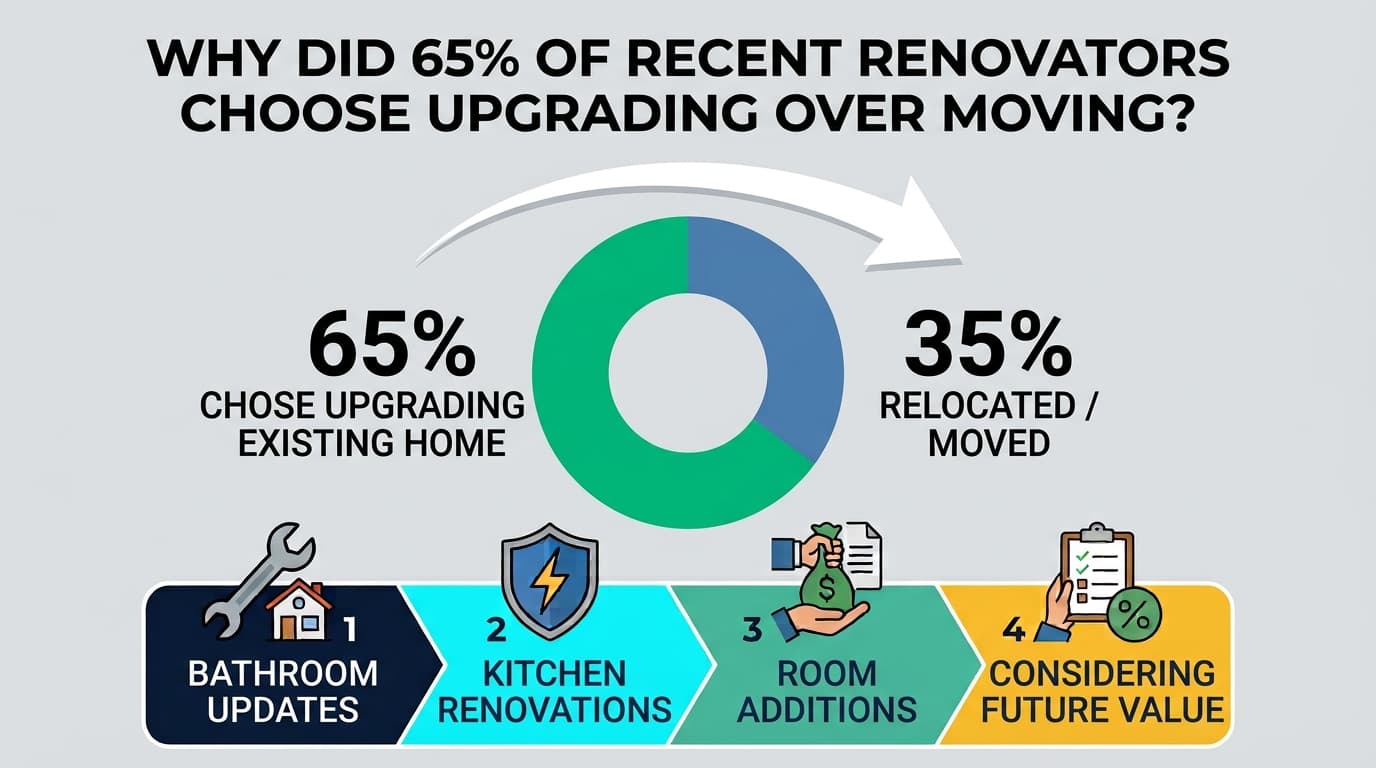
Redfin reported that 65% of homeowners who had recently renovated chose to upgrade their existing home instead of moving. The finding comes from a survey of 4,000 U.S. residents conducted by Ipsos in November 2025. Remodeling can be an alternative to relocating.
Moving may require selling a current property, paying closing costs, hiring movers, and adjusting to a different mortgage payment. Renovation offers a way to address specific needs while keeping an established location, although major projects can still be expensive.
Redfin’s survey points to several common improvements, including fresh paint, bathroom updates, and kitchen renovations. In Central Florida, owners might also consider a room addition, flooring installation, improved storage, or updates that make a home more functional.
Before committing, homeowners should:
- Identify the problem the renovation needs to solve.
- Set a maximum budget and prioritize essential work.
- Compare remodeling estimates with the full cost of moving.
- Consider whether the planned improvement fits the property and likely future needs.
Remodeling is not guaranteed to increase resale value by the amount spent. The outcome depends on workmanship, materials, local buyer preferences, and the property’s condition. A project should make financial and practical sense for the owner.
How Do 78.8% Sub-6% Mortgage Rates and 16% Rate Lock-In Shape Remodeling?
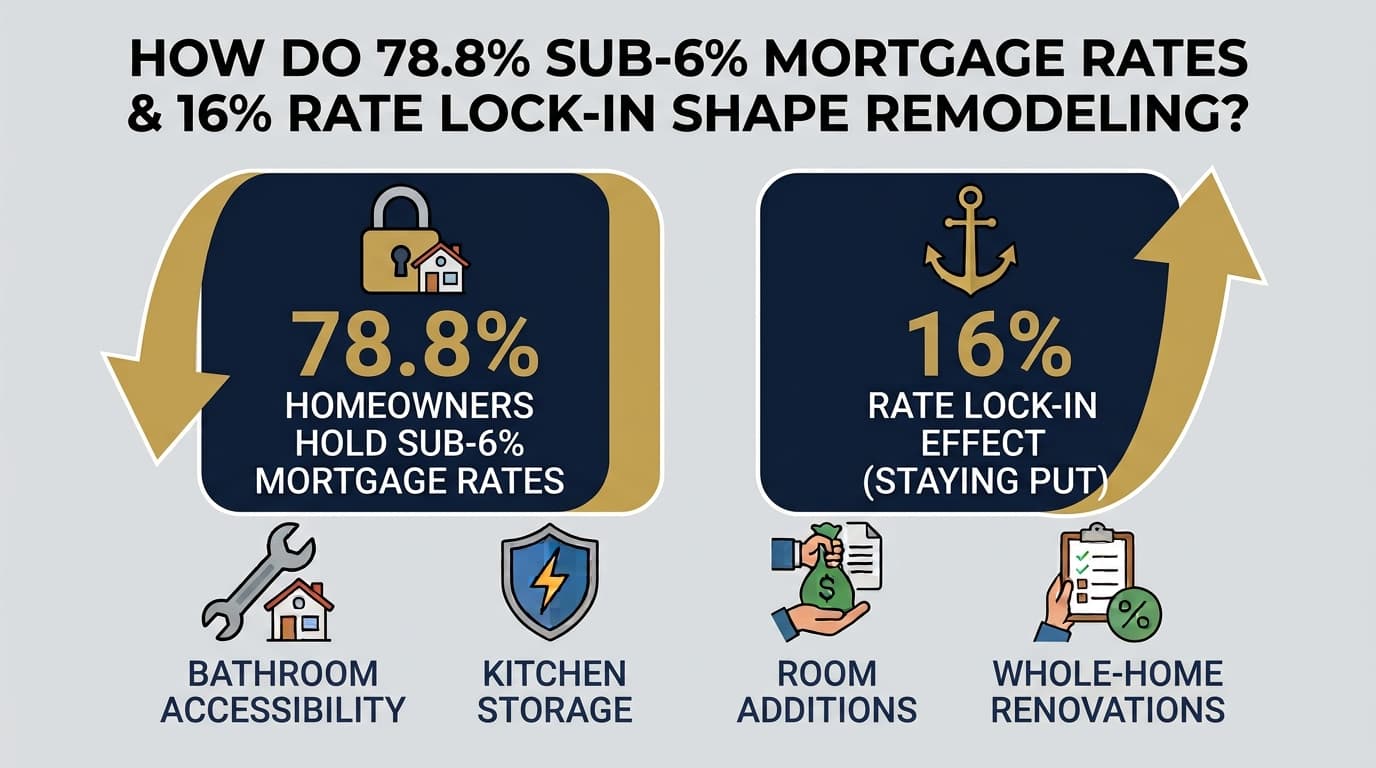
The supplied figures say 78.8% of mortgaged homeowners have mortgage rates below 6%, while 16% stay in their homes specifically to avoid giving up a low rate. The 16% figure aligns with Redfin’s reporting on the mortgage lock-in effect. The 78.8% figure is attributed to Redfin and the Federal Housing Finance Agency.
A homeowner with a favorable mortgage rate may be reluctant to replace it with a new loan at a higher rate. That can make moving less attractive, especially when a family likes its neighborhood but needs more space or a better layout.
The figures measure different things and should not be added together. One describes mortgage-rate distribution. The other describes a reported reason for staying put.
For some owners, remodeling may address changing needs without a move:
- Bathroom remodeling can improve accessibility or accommodate a growing household.
- Kitchen renovations can improve storage, workflow, and everyday use.
- A room addition may create space for an office, guest room, or extended family.
- Whole-home remodeling can address several connected problems at once, but it needs careful budgeting.
Before starting, compare the cost of construction with the cost of relocating and the likely future value of the property. A low mortgage rate can be a reason to investigate remodeling. It does not make every renovation affordable.
Why Is the Home Remodeling Market Projected to Reach $1.29 Trillion by 2030?
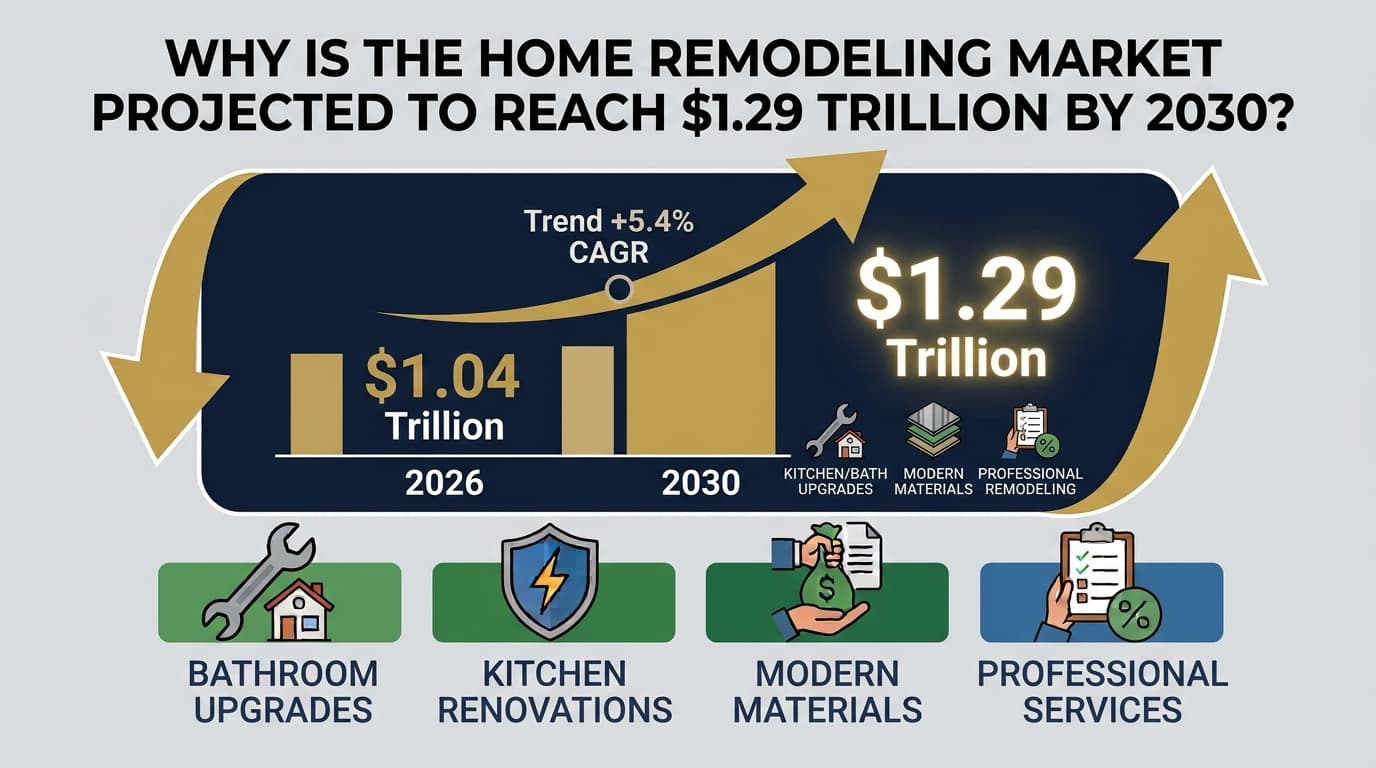
Research and Markets’ 2026 report projects that the global home remodeling market will grow from $1.04 trillion in 2026 to $1.29 trillion by 2030, a projected 5.4% compound annual growth rate.
| Market measure | Supplied forecast |
|---|---|
| Global market in 2026 | $1.04 trillion |
| Projected market in 2030 | $1.29 trillion |
| Projected annual growth | 5.4% CAGR |
The report identifies demand for kitchen and bathroom upgrades, home repair, modern materials, and professional renovation services as factors supporting the market. Homeowners also seek ways to adapt existing properties as their needs change.
This global forecast does not prove that Lakeland remodeling revenue will grow at the same rate. Local activity depends on household finances, labor availability, permitting, material prices, and the local housing market.
For homeowners, the broad trend is a reason to plan carefully. A sound project begins with a defined scope, realistic estimates, and an understanding of how the work will affect daily life.
Why Have Building Material Costs Risen 15% in One Year?
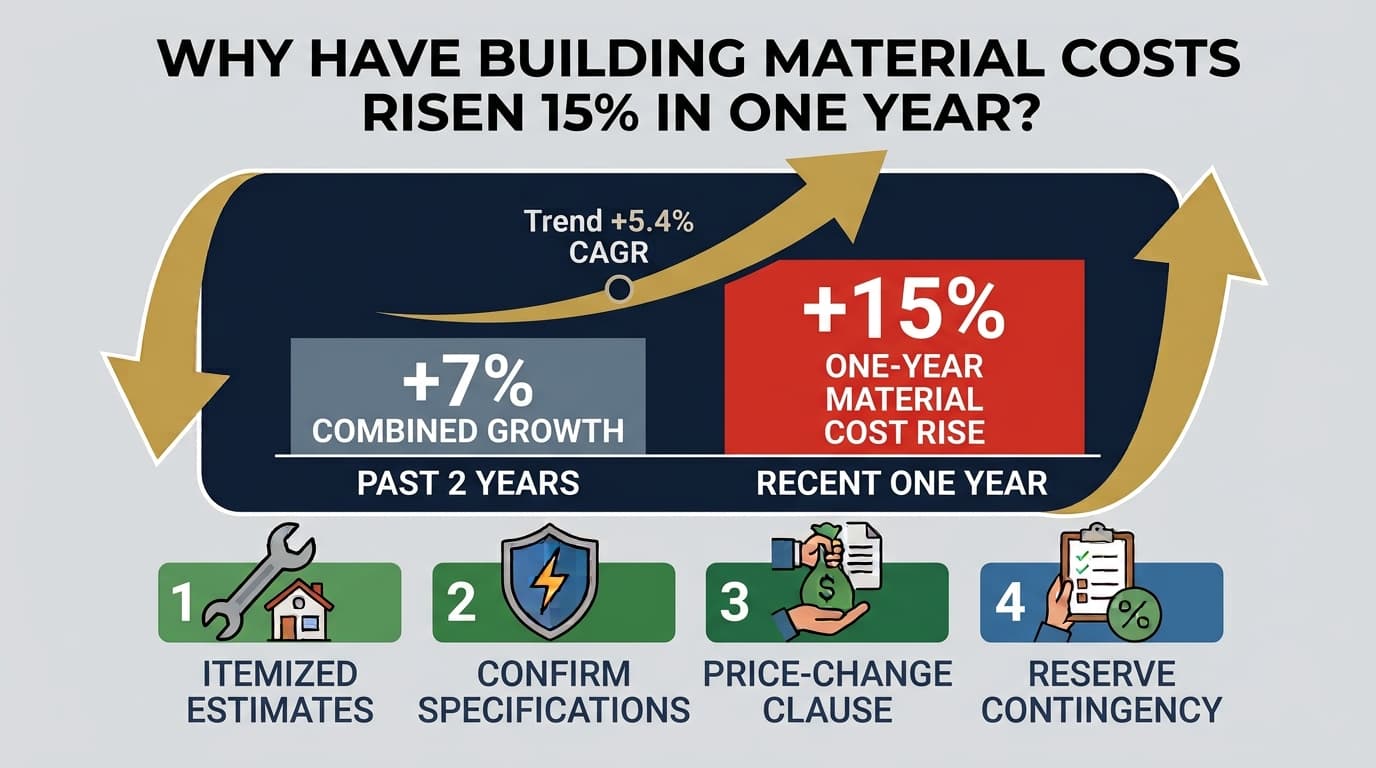
Insurance Business America, citing Insurify, reports that building-material costs rose 15% over the past year, compared with a combined 7% increase during the previous two years. Materials can put added pressure on remodeling budgets.
Higher material costs can affect projects ranging from kitchen renovations and bathroom upgrades to additions and storm-damage rebuilds. The actual impact depends on which products a project needs, supplier pricing, availability, and the timing of purchases.
Homeowners can reduce avoidable budget surprises by following a few steps:
- Request an itemized written estimate that separates labor, materials, allowances, and other costs.
- Confirm the product specifications before approving the contract.
- Ask how substitutions or price changes will be handled.
- Keep a contingency reserve for concealed damage or unexpected work.
- Compare estimates using the same scope rather than choosing by the headline price alone.
Not every product rises at the same rate, and a reported industry-wide increase does not mean every project costs 15% more. Clear specifications and documented changes help owners understand what they are paying for.
How Can Lakeland Homeowners Plan a Self-Pay Remodel?
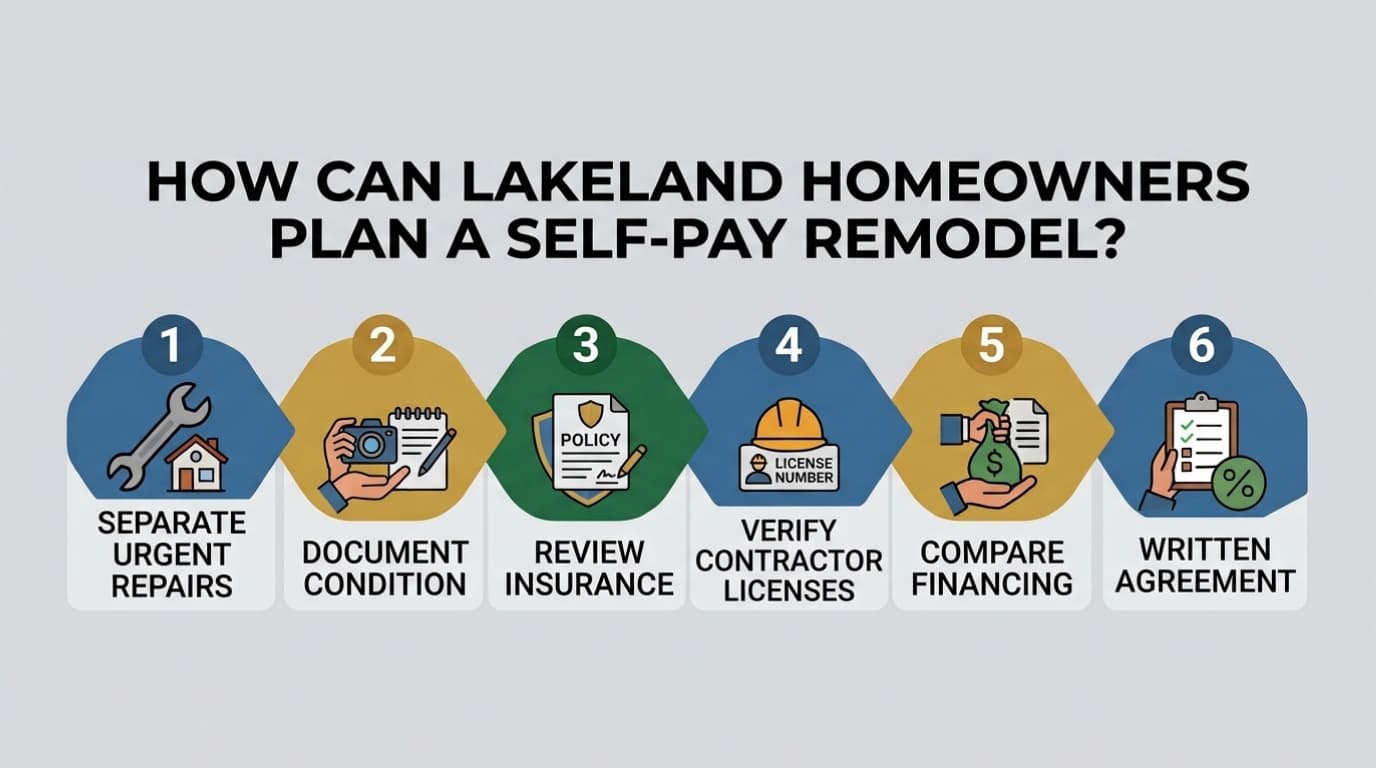
Homeowners can make a self-funded project more manageable by prioritizing repairs, setting a budget, and obtaining detailed estimates before work begins. Self-pay can offer control over timing and project scope. It should not replace a valid insurance claim without careful consideration.
| Project type | Planning priority |
|---|---|
| Storm-related damage | Document damage and review insurance coverage |
| Essential home repairs | Address safety issues and prevent further damage |
| Kitchen or bathroom remodel | Define the scope, finishes, and material allowances |
| Home addition | Review budget, permits, and structural feasibility |
| Storm-hardening improvements | Check local requirements and suitable products |
A practical planning process includes the following steps:
- Separate urgent repairs from optional upgrades. Address unsafe conditions and active damage first.
- Document the property’s condition. Keep dated photographs, estimates, receipts, and relevant correspondence.
- Review insurance options. Ask the insurer about coverage, deductibles, deadlines, and the effect of starting work before an inspection.
- Confirm contractor credentials. Check the applicable Florida license and verify who is responsible for permits and inspections.
- Compare financing carefully. Review interest, fees, monthly payments, and the total amount repayable.
- Get the agreement in writing. Confirm the scope, payment schedule, expected timeline, change-order process, and warranty terms.
For homeowners in Lakeland, Plant City, Tampa, Brandon, Winter Haven, and nearby Central Florida communities, True Builders is a licensed general contractor for remodeling and storm-restoration estimates. Check the Florida license, insurance, references, and the written contract before you hire any contractor.
What Should Lakeland Homeowners Know Before Choosing Self-Pay Remodeling?
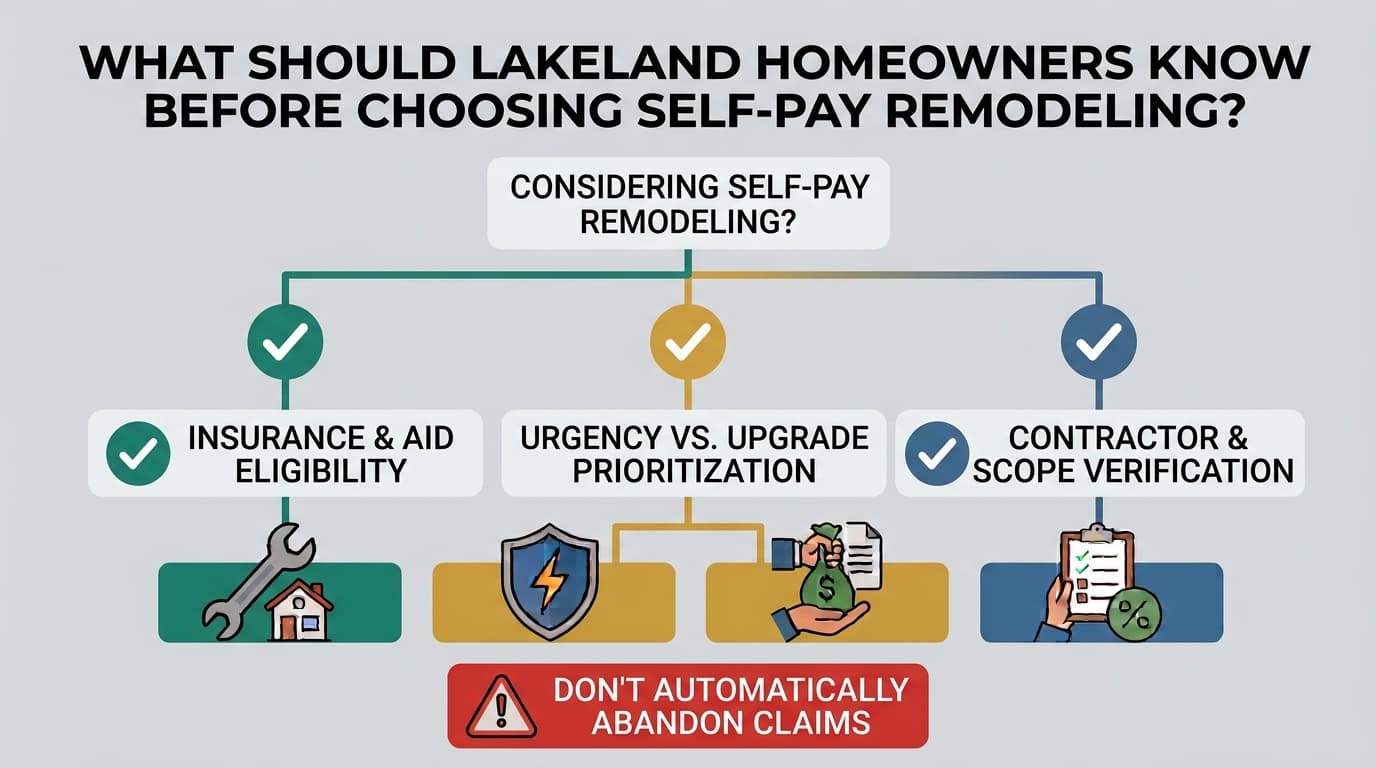
Self-pay remodeling may suit owners who want to proceed with a defined project. The choice should follow a review of the property’s condition, finances, and insurance position.
Before signing a contract, homeowners should check:
- Whether damage may qualify for insurance coverage or disaster assistance.
- Which repairs are urgent and which improvements can wait.
- Whether moving would be more practical than renovating.
- Whether the estimate includes permits, labor, materials, and possible extra work.
- Whether the contractor’s license and insurance are current.
- Whether the payment schedule and written scope are clear.
Homeowners should also avoid assuming that every denied or delayed claim requires them to abandon the insurance process. Policy language, documentation, deadlines, and claim circumstances matter. A qualified insurance professional or attorney may help explain available options where needed.
True Builders is a local option for home remodeling in Lakeland and for storm-recovery work. A self-pay project still needs a written scope, a current license, and a clear payment schedule. Call (863) 647-1800.
The shorter release is here: Home Remodeling Lakeland Surges as 1 in 5 Homeowners Go Uninsured.